
Sponge Gourd Benefits: How the Right Seeds Improve Yield and Market Quality
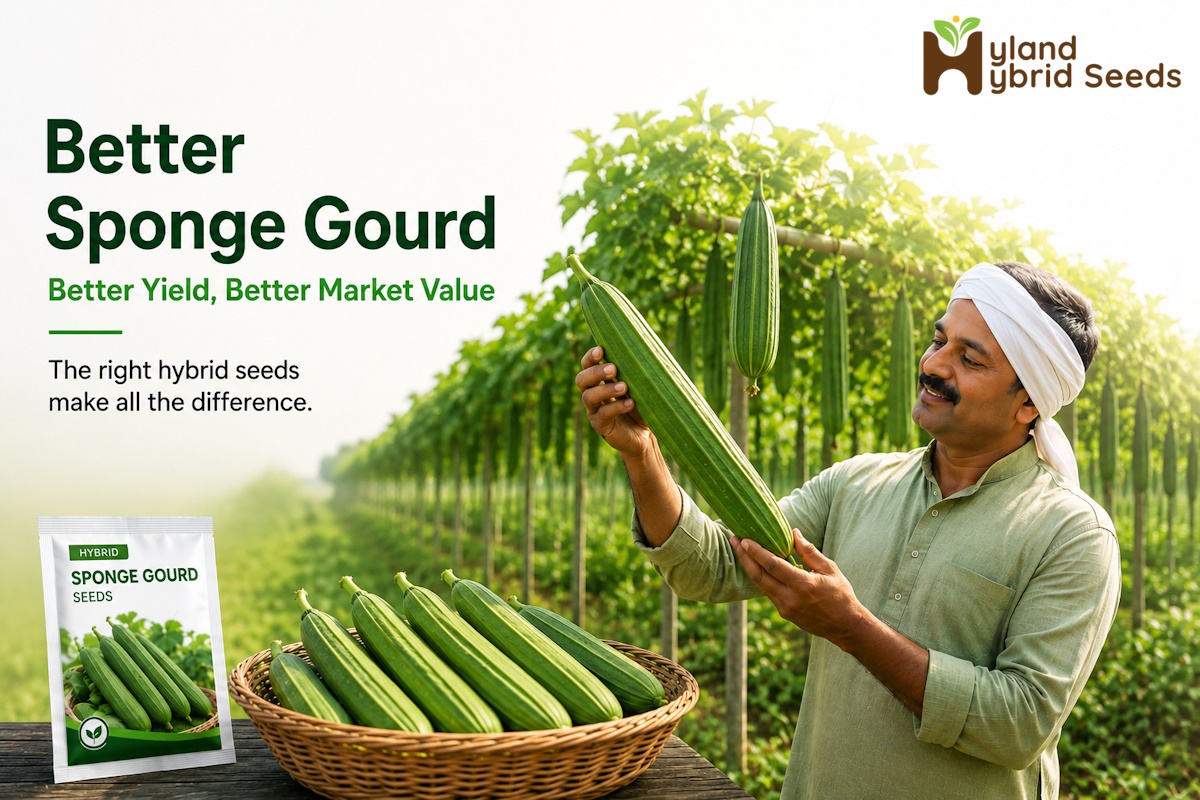
Sponge gourd, commonly known as Luffa cylindrica or Nenua in various parts of India, is rapidly emerging as one of the most reliable and profitable vegetables for year-round cultivation. While many farmers historically viewed it as a simple kitchen garden crop, commercial growers now recognize its massive potential in urban and semi-urban markets. The rising demand for fresh, tender, and nutritious green vegetables has turned this hardy gourd into a high-value agricultural choice. However, achieving consistent profitability per acre requires more than standard field preparation, it demands a deep understanding of crop genetics and seed performance.
To fully unlock the diverse sponge gourd benefits, growers must prioritize seed quality from the very beginning of the cultivation cycle. Standard or saved seeds often lead to uneven germination, high susceptibility to viruses, and fruit distortion, which drastically reduce your market value. By transitioning to high-quality wholesale hybrid seeds, commercial growers can secure uniform fruit size, deep green color, and continuous fruiting over an extended harvest window. This article provides a comprehensive look at how seed selection impacts sponge gourd yield, crop resilience, and your final market returns.
The Commercial Value of Sponge Gourd in Modern Agriculture
Sponge gourd cultivation has shifted from subsistence farming to large-scale commercial production. This shift is driven by the crop’s short maturity cycle, steady consumer demand, and excellent suitability for intensive farming practices.
Why Sponge Gourd Ranks Among the Most Profitable Vegetables
Sponge gourd is highly valued because it offers an exceptionally quick return on investment. Farmers can begin harvesting within 45 to 55 days of sowing, allowing for multiple crop rotations within a single calendar year. The continuous flowering and fruiting habits of the crop ensure a steady weekly income stream for smallholder and commercial farmers alike, helping to stabilize cash flow throughout the season.
Sustained Market Demand and Consumer Preferences
Modern consumers prefer sponge gourd that is tender, fiber-free, and has a rich, deep green color. When growers use superior seeds, they produce fruits that retain their tenderness for longer periods, reducing transport losses and commanding premium prices at wholesale markets. Ensuring your crop meets these visual and physical standards is the key to securing long-term buying contracts with wholesale distributors.
Key Sponge Gourd Benefits for Commercial Growers
Investing in sponge gourd cultivation offers unique agronomic and financial advantages that can transform a farm’s annual profitability when managed with the right inputs.
High Return on Input Costs
Compared to other gourds, sponge gourd requires moderate fertilizer and water inputs. When paired with high-yield seeds, the crop displays an excellent fertilizer conversion rate, turning soil nutrients into marketable fruits rather than excessive vegetative growth. This efficiency lowers the overall cost of production per kilogram of harvested produce.
Adaptability to Varied Agro-Climatic Zones
One of the primary sponge gourd benefits is its ability to thrive in warm, humid climates across India. It grows successfully in sandy loam to clay loam soils, provided there is proper drainage. This climate resilience makes it an ideal option for both summer and rainy season cultivation, protecting farmers against unexpected weather fluctuations.
Suitability for Multi-Cropping and Trellis Systems
Sponge gourd vines perform exceptionally well on bower or trellis systems. This vertical cultivation maximizes land-use efficiency, keeps the fruits off the damp ground to prevent rot, and ensures uniform sunlight exposure. The result is straight, spotless fruits that attract premium prices in wholesale markets.
Want better yield and fruit quality this season?
How Seed Selection Directly Impacts Crop Yield and Market Quality
The difference between a high-yielding, profitable harvest and a crop failure often lies in the seed packet. Let us analyze why genetics matter so much in modern vegetable farming.
The Pitfalls of Low-Quality and Saved Seeds
Using non-descript or saved seeds introduces massive risks to the farm. These seeds are highly vulnerable to devastating diseases like Downy Mildew, Powdery Mildew, and Mosaic Virus. Furthermore, they produce fruits of irregular shapes and sizes, which wholesale buyers reject or purchase at throwaway prices, leaving the farmer with unpaid input bills.
The Advantages of Premium Wholesale Hybrid Seeds
Transitioning to premium wholesale hybrid seeds guarantees physiological vigor and genetic purity. These hybrids are specifically bred for uniform germination, vigorous vine growth, and high female-to-male flower ratios, which directly translates to a much higher number of fruits per vine.
Uniform Fruit Weight and Length
Wholesale buyers look for consistency above all else. Hybrid seeds produce fruits that maintain a uniform weight, typically 100 to 150 grams, and a desirable length of 20 to 25 centimeters. This consistency simplifies packaging, reduces sorting labor, and lowers rejection rates at the market.
Enhanced Shelf Life and Transportability
Unlike local varieties that become soft and yellow quickly after harvest, advanced hybrids are bred to retain their firmness and deep green color. This prolonged shelf life is critical for transporting produce to distant urban centers or processing facilities without losing market value.
Producing Export Quality Vegetables: What Buyers Look For
The export market for fresh gourds is growing rapidly, particularly to Middle Eastern and European countries. To tap into this lucrative segment, growers must meet strict quality parameters.
Aesthetic Standards: Color, Shape, and Ribbing
International markets demand straight, slender, and uniformly ribbed sponge gourd fruits. There should be no curves, insect punctures, or mechanical scars on the skin. High-quality seeds ensure that the fruits develop uniform, attractive longitudinal ridges that meet these strict aesthetic standards consistently across harvests.
Residue-Free Cultivation and Pest Management
To qualify as export quality vegetables, the crop must be free from harmful chemical residues. This requires planting hybrids that have built-in tolerance to major pests, such as fruit flies and red pumpkin beetles. Built-in tolerance reduces the need for frequent chemical sprays, keeping the produce safe, organic-compliant, and eligible for export premium prices.
Planning commercial sponge gourd farming?
Critical Agronomic Practices for Maximizing Sponge Gourd Yield
While genetics lay the foundation, proper crop management ensures that the crop achieves its full genetic potential in the field.
Soil Preparation and Sowing Depth
Prepare the main field by deep plowing to a depth of 30 centimeters to ensure loose, airy soil for robust root development. Incorporate well-rotted farmyard manure to enrich the organic matter of the soil. Seeds should be sown at a depth of 2 to 3 centimeters, maintaining a spacing of 1.5 to 2 meters between rows and 60 to 75 centimeters between plants.
Irrigation and Nutrient Management
Sponge gourd requires regular, moderate irrigation to prevent moisture stress. Drip irrigation is highly recommended, as it delivers water directly to the root zone, reduces weed growth, and maintains optimal soil moisture. A balanced application of nitrogen, phosphorus, and potassium is essential, with nitrogen split into multiple doses to support vine growth and fruit development during the early phases.
Trellising and Pruning Techniques
Training the vines onto a trellis or bower system is non-negotiable for commercial farming. Prune the side branches up to the first 50 centimeters of the main stem to encourage stronger upward growth. This practice improves air circulation, minimizes fungal infections, and makes harvesting much easier and less time-consuming.
Common Seed Selection Mistakes Farmers Must Avoid
Avoidable mistakes during the seed purchasing phase can easily derail an entire season’s hard work, heavy investment, and high hopes.
Choosing Seeds Based Solely on Price
Many growers fall into the trap of buying cheaper seeds to save on initial input costs. However, low-cost seeds often suffer from poor germination rates and weak disease resistance. The money saved on seeds is quickly lost to lower crop yields and higher pesticide expenses later in the season.
Ignoring Local Climate and Seasonal Suitability
Not all sponge gourd hybrids are suitable for every season. Sowing a wet-season hybrid during the peak dry summer months can lead to poor fruit set and high flower drop. Always consult with seed specialists or local distributors to match the hybrid variety with the specific sowing window of your region.
Failing to Verify Seed Source and Genetic Purity
Always purchase seeds from reputed brands like Hyland Hybrid Seeds to ensure you are getting genuine, certified genetics. Unbranded seeds often contain physical impurities, weed seeds, or mixed varieties, leading to uneven crop development and poor market returns.
Practical Guidance for Your Next Sponge Gourd Crop
As you prepare for the upcoming sowing season, remember that successful farming is a combination of the right decisions made at the right time. Your choice of seed is the single most important decision that dictates your farm’s productivity and profitability limit.
To maximize the sponge gourd benefits on your farm, begin by evaluating your soil quality, water availability, and local market preferences. Choose a hybrid seed variety that aligns with these factors, set up a sturdy trellis system, and follow a balanced fertilizer regimen. By focusing on quality genetics and disciplined field management, you can minimize crop risks, lower your overall production costs, and secure premium prices at the wholesale market.
Ready to grow a more profitable sponge gourd crop?
Frequently Asked Questions
What is the ideal sowing season for sponge gourd in India?
How long does it take to harvest sponge gourd after sowing?
How can I prevent the yellow mosaic virus in sponge gourd?
Why are my sponge gourd fruits curving or growing irregularly?