
How to Select Chilli Seeds for High Yield Based on Season, Soil and Market Needs
Commercial chilli cultivation represents one of the most dynamic and profitable segments of commercial horticulture, yet it carries significant operational risks. Every season, growers face critical decisions regarding crop investment, pest management, and irrigation scheduling. However, no single operational factor shapes overall farm success quite as decisively as the initial choice of planting material. Planting an unsuitable variety in the wrong soil or during an unfavorable seasonal window can severely restrict plant development, leaving crops vulnerable to environmental stress and limiting overall revenue potential.
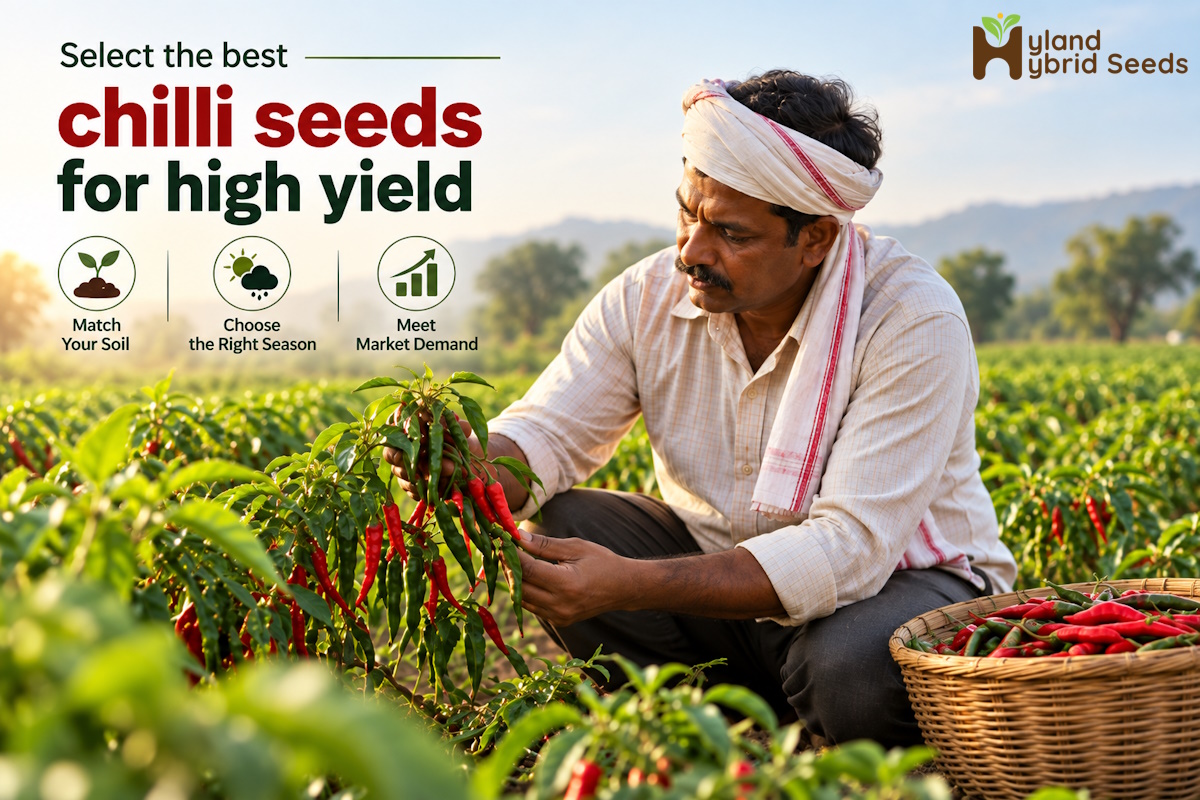
Achieving consistent farm returns requires choosing chilli seeds for high yield that align directly with regional soil profiles, prevailing seasonal weather, and local market specifications. Whether producing fresh green chillies for metropolitan wholesale markets or cultivating dry red crops for industrial processing, seed selection dictates fruit set uniformity, harvest duration, and post-harvest quality. By evaluating field characteristics and trade requirements together, growers can invest in high-performing genetics that protect profit margins while reducing cultivation risks across the production cycle.
Evaluating Soil Texture, Salinity, and Drainage Requirements
The foundation of any successful chilli crop begins beneath the surface. Chilli plants feature a relatively delicate, fibrous root system that responds quickly to variations in soil porosity, drainage efficiency, and mineral concentration. Matching seed vigor to existing field conditions ensures balanced vegetative development and steady flowering throughout the growing period.
Adapting to Sandy Loam and Clay Soil Types
Soil texture fundamentally controls water retention and root aeration, which directly impacts how effectively a chilli hybrid establishes itself after transplanting. Light sandy loam soils warm up quickly and facilitate rapid early root elongation, but they dry out rapidly and leach nutrients under heavy irrigation. For these soil profiles, growers need vigorous hybrids that establish deep root architectures capable of accessing deeper moisture reserves and sustaining steady nutrient uptake.
Conversely, medium-to-heavy clay soils retain water and nutrients effectively but present severe risks of waterlogging and root compaction during continuous rains. In such fields, poor aeration can choke feeder roots, predisposing the crop to fungal root rots and sudden wilting. Choosing an adaptable Chilli Seed Variety with robust root vigor helps the plant withstand fluctuating moisture levels in heavier soils, ensuring steady growth even during wet weather spells.
Managing Soil pH and Salinity Challenges
Chilli crops perform best in soils with a slightly acidic to neutral pH range of 6.0 to 7.0. When soil pH strays into alkaline territory, or when high electrical conductivity indicates elevated soil salinity, plants struggle with micronutrient uptake, particularly iron, zinc, and phosphorus. This deficiency often manifests as stunted growth, yellowing leaves, and poor flower retention. In fields prone to mild salinity or calcareous conditions, selecting varieties with strong natural vigor helps sustain cellular nutrient transport, keeping the plant productive despite underlying soil stress.
Aligning Chilli Seed Selection with Seasonal Climate Cycles
Temperature fluctuations, relative humidity, and photoperiod heavily influence chilli reproductive biology. A variety that excels in cool, dry conditions may fail completely during periods of high heat and continuous monsoon humidity. Choosing seeds calibrated to seasonal weather cycles is essential for maintaining steady fruit set and avoiding blossom drop.
Kharif Season Considerations and Moisture Resilience
The Kharif planting window brings abundant rainfall, high atmospheric humidity, and elevated disease pressure. While warm temperatures encourage rapid vegetative growth, high humidity creates an ideal environment for foliar pathogens, bacterial leaf spots, and anthracnose fruit rot. Furthermore, continuous cloud cover can reduce photosynthetic efficiency, leading to excessive vegetative growth at the expense of early flower development.
For Kharif cultivation, growers should prioritize hybrids that exhibit strong branch strength to support heavy fruit loads in windy conditions, open plant architecture to improve air circulation within the canopy, and reliable fruit-setting capability under overcast skies. Working with an experienced Hybrid Chilli Seeds Supplier allows commercial farmers to select genetics specifically evaluated for wet-season stability, preventing premature harvest loss caused by weather-induced flower drop.
Rabi and Summer Cultivation Realities
Rabi and early summer plantings present a completely different set of agronomic challenges. In the Rabi cycle, cool night temperatures during the early vegetative and flowering stages can slow plant metabolism, causing pollen sterility and delayed fruit development. As the season transitions into summer, daytime temperatures often climb above 35 degrees Celsius, accompanied by dry winds and intense sunlight.
Under these extreme conditions, unadapted varieties drop their blossoms and produce smaller, misshapen fruits with thin pericarps prone to sunscald. Commercial growers preparing for late Rabi or summer harvest windows must focus on heat-tolerant genetics that sustain pollen viability during temperature spikes, while dense foliage cover shields developing fruit from direct solar injury.
Selecting Seed Varieties Based on Specific Market Demands
High yield in the field means very little if the harvested produce does not match the precise commercial standards of local or distant buyers. Market demand for chilli is highly segmented based on end use, geographic preferences, pungency ratings, and physical appearance. Aligning seed choice with market requirements guarantees that produce commands premium prices at the mandi.
Physical Attributes for Fresh Green Chilli Markets
In the fresh vegetable trade, buyer preference is driven almost entirely by visual appeal and physical specifications. Different regions in India demand distinctly different fruit traits:
-
- Fruit Length and Girth: Certain regional mandis prefer short, stout chillies measuring 6 to 8 centimeters, while others demand slender, elongated fruits ranging from 10 to 14 centimeters.
-
- Color and Gloss: The fresh market is split between demands for deep, dark green fruits and bright, light green or parrot green produce. A shiny, waxy skin surface is vital for perceived freshness.
-
- Pericarp Thickness and Firmness: Fruits with firm walls resist crushing during packing, reducing post-harvest moisture loss during transit to urban markets.
-
- Pungency Levels: Fresh consumption preferences range from mild culinary heat to very high pungency, depending on culinary traditions in the target consumption zones.
Investing in proven hybrid chilli seeds developed for fresh market uniformity ensures that a high percentage of harvested fruits fall within acceptable market grades, minimizing sorting rejections at the farm gate.
Requirements for Dry Red Chilli and Processing Sectors
Cultivating chillies for the dry market or industrial extraction requires an entirely different genetic focus. Dry chilli buyers, stockists, and oleoresin processors evaluate produce on physical drying behavior, color retention, and chemical characteristics:
-
- ASTA Color Value: Processing companies evaluate red color intensity using the ASTA scale. High-color varieties that retain deep red pigmentation without darkening during drying fetch substantial premiums.
-
- Capsaicin Content: Industrial buyers extracting capsaicin for pharmaceutical and food additive uses demand varieties with verified high pungency profiles.
-
- Wrinkle Pattern and Skin Uniformity: The presence of characteristic surface wrinkles or smooth skin defines specific commercial grades in major spice markets.
-
- Dry Recovery Percentage: Thin-to-medium skin varieties that lose water cleanly without rotting or discoloring produce higher dried output per unit of fresh weight, directly boosting net farmer earnings.
Disease Tolerance and Plant Vigor as Yield Protectors
Achieving a high harvest volume requires maintaining healthy foliage and continuous flowering across several harvest flushes. In commercial chilli farming, viral complexes spread by vector insects pose the single greatest threat to continuous yield. Selecting seed varieties with enhanced field tolerance is the most practical first line of defense.
Managing Pest Pressure and Viral Stresses
Sucking pests, including thrips, whiteflies, aphids, and mites, transmit damaging plant viruses such as Chilli Leaf Curl Virus and cucumber mosaic strains. Once a field suffers widespread viral infection, plant growth stops, leaves curl upward or downward, and existing flowers abort, drastically reducing harvest volume. While chemical controls can manage vector populations, genetics play a decisive role in how plants respond to feeding pressure.
High-performing varieties exhibit exceptional early vegetative vigor and systemic resilience, allowing them to outgrow early-season vector pressure and maintain fruit production even under moderate environmental stress. This physiological endurance ensures that the investment in field preparation, fertilizers, and labor translates directly into sustained picking cycles, helping growers optimize their total chilli yield per acre over a longer harvesting window.
Practical Steps for Choosing High Yield Chilli Varieties
Navigating the wide array of commercial seeds available in the market can be challenging. Growers who consistently achieve profitable harvests avoid making impulsive seed purchases based solely on package marketing or neighbor recommendations. Instead, they follow a systematic selection framework tailored to their specific farm operations.
Reviewing Field History and Irrigation Capacity
Before purchasing seed, evaluate the specific historical pressures of your land. If a particular field has a history of fungal wilt or severe nematode pressure, selecting a hybrid with exceptional root vigor is mandatory. Similarly, assess your irrigation infrastructure. If water supplies are limited to drip systems running on restricted schedules during the dry season, prioritize compact, highly efficient hybrids that maintain fruit set with optimized moisture rather than sprawling, high-water-demand varieties.
Balancing Seed Cost Against Total Economic Return
A common mistake in commercial chilli farming is choosing low-cost seed to save on initial planting expenses. High-grade hybrid seeds undergo rigorous breeding, purity screening, and germination testing to ensure uniform field emergence and genetic stability. While premium hybrid seed represents a slightly higher initial expense per acre, the cost difference is negligible when compared to total operational investments in land preparation, mulching, drip lines, fertilizers, and harvesting labor.
A superior variety that produces uniform, premium-grade fruits with two or three additional pickings easily repays the original seed investment many times over. High yield chilli varieties deliver predictable fruit grading, better transport durability, and higher marketable percentages, protecting commercial farmers against total crop failure caused by substandard planting material.
Making a Strategic Seed Decision for the Coming Season
Achieving consistently high profitability in commercial chilli cultivation is not a matter of luck; it is the direct outcome of disciplined crop planning. Soil conditions, planting schedules, local weather trends, and regional wholesale market requirements must all guide your seed selection process. When these four variables align with the genetic strengths of a well-bred hybrid, the crop develops steady vigor, tolerates field stresses, and delivers a superior harvest of marketable produce.
As you prepare for the upcoming growing cycle, consult with local agronomists, examine wholesale market grade demands, and review your soil health profile. Taking the time to select proven chilli seeds for high yield that fit your precise growing environment establishes the foundation for a productive, resilient, and highly rewarding farming season.
Frequently Asked Questions
How do I choose the best chilli seeds for high yield on my farm?
Can the same chilli seed variety be grown in both Kharif and Summer seasons?
Why is fruit uniformity so important when selecting hybrid chilli seeds?
Does soil drainage impact the yield potential of hybrid chillies?