
Hybrid Vegetable Seeds for Commercial Farming: A Complete Selection Guide
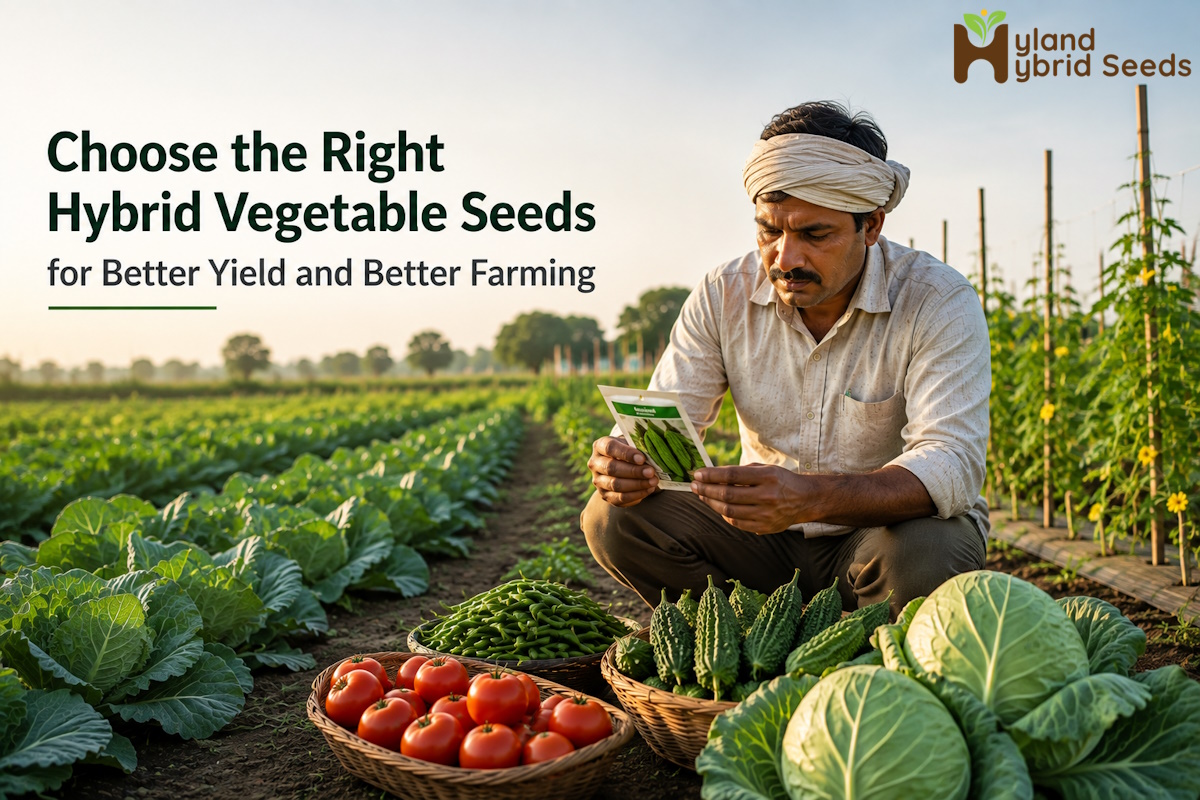
Commercial vegetable farming is becoming more competitive every year. Farmers need crops that grow well, produce good yields, have strong market demand, and can handle common field problems. One of the most important decisions behind a successful vegetable crop is choosing the right seeds.
For many commercial growers, hybrid vegetable seeds are a preferred choice because they are developed to provide useful features such as better yield, uniform growth, improved fruit quality, and resistance to certain diseases. However, every hybrid is different. A seed variety that performs well in one region may not give the same results in another location.
This is why farmers should not select seeds only by looking at the price, packaging, or popularity of a variety. Climate, soil type, growing season, market demand, disease pressure, and farming method should all be considered.
This guide explains how to select hybrid seeds for commercial vegetable farming and what farmers should look for when choosing important crops such as tomato, chilli, cabbage, and bitter gourd.
Not sure which hybrid vegetable seeds are right for your farm?
What Are Hybrid Vegetable Seeds?
Hybrid vegetable seeds are produced by crossing two carefully selected parent lines. The aim is to combine useful qualities from both parents into one variety.
For example, one parent may have strong disease resistance while another may produce high-quality fruits. By crossing them, seed breeders try to create a hybrid that offers both benefits.
Commercial farmers often choose hybrid vegetable seeds because they can provide:
- Higher yield potential
- Better crop uniformity
- Improved fruit size, shape, and colour
- Better market quality
- Early or planned maturity
- Resistance or tolerance to certain diseases
- Better performance under specific growing conditions
- Improved transport and storage quality in some varieties
However, buying hybrid seeds does not automatically guarantee a good harvest. Crop management, irrigation, nutrition, pest control, soil health, and weather conditions still play a major role in final production.
Why Seed Selection Matters in Commercial Farming
Seeds are the starting point of the crop. A wrong choice can affect the entire season.
Commercial farmers normally grow vegetables for specific markets. Some supply wholesale markets, some work with retailers, and others sell to processors or local buyers. Each market may prefer a different fruit size, colour, shape, taste, firmness, or harvest period.
For example, a tomato farmer supplying distant markets may need firm fruits with good transport ability. A grower selling directly in a local market may focus more on appearance and taste.
Seed selection should therefore begin with a simple question:
What kind of crop does the market want?
Once the market requirement is clear, farmers can compare suitable varieties according to field conditions.
Important Factors When Choosing Hybrid Vegetable Seeds
1. Select Seeds According to Your Climate
Temperature has a major effect on vegetable growth. Some varieties perform better in warmer conditions, while others are suitable for cooler seasons.
Before buying seeds, check the recommended sowing season and temperature range of the variety.
Also consider local conditions such as:
- Summer temperature
- Winter temperature
- Rainfall
- Humidity
- Dry periods
- Length of the growing season
Choosing a variety suitable for the local climate gives the crop a stronger start.
2. Understand Your Soil
Vegetable crops need suitable soil conditions for healthy root growth.
Farmers should know their soil type, drainage, fertility, organic matter level, and pH before selecting crops and planning fertilizer use.
Some fields hold water for longer periods, while sandy soils may lose moisture quickly. These differences can influence plant growth and crop performance.
Soil testing before the season can also help farmers plan nutrition more accurately.
3. Check Disease Resistance
Diseases can reduce both yield and market quality. They can also increase the cost of crop protection.
Many hybrid vegetable seeds are developed with resistance or tolerance to particular diseases. Farmers should study the disease history of their fields and choose varieties accordingly.
For example, if a disease regularly appears in tomato crops in a certain area, selecting a hybrid with suitable resistance may reduce risk.
However, disease-resistant seeds should still be used together with good farming practices such as field hygiene, crop rotation, balanced nutrition, proper spacing, and timely crop protection.
4. Consider Yield Potential
High yield is important in commercial farming, but it should not be the only reason for selecting a seed.
A variety may produce many fruits, but those fruits must also meet market quality requirements.
Farmers should consider both:
Total yield + marketable yield
Marketable yield refers to vegetables that can actually be sold. Uniform size, attractive colour, proper shape, firmness, and low damage can all improve the percentage of marketable produce.
5. Look at Maturity Period
Different varieties require different amounts of time before harvesting begins.
Early-maturing hybrids can help farmers enter the market sooner. In some cases, early produce may receive better prices.
Medium and longer-duration varieties may be suitable for different production plans.
Commercial farmers can also use varieties with different maturity periods to spread harvesting over several weeks instead of producing the entire crop at once.
How to Choose Hybrid Tomato Seeds
Tomato is one of the most widely grown vegetables for commercial markets. Selecting the right hybrid tomato seeds depends heavily on the target market and growing system.
Farmers should first decide whether they need tomatoes for fresh markets, long-distance transport, processing, protected cultivation, or local sale.
Important traits to check include:
- Fruit size
- Fruit shape
- Colour
- Firmness
- Shelf life
- Yield potential
- Plant growth habit
- Harvest duration
- Disease resistance
- Suitability for the growing season
Fruit firmness is especially important when tomatoes need to travel long distances. Softer fruits may be damaged during harvesting, packing, and transport.
Growers should also consider whether the hybrid is determinate or indeterminate.
Determinate tomato plants usually grow to a limited height and produce much of their crop within a shorter period. Indeterminate plants continue growing and producing for a longer time when conditions are suitable.
The correct choice depends on the farming method, support system, labour availability, and marketing plan.
How to Select Hybrid Chilli Seeds
Chilli is another important commercial vegetable crop. The right hybrid chilli seeds should be selected according to the type of chilli demanded by buyers.
Different markets may prefer different:
- Fruit lengths
- Fruit thicknesses
- Colours
- Shapes
- Levels of pungency
- Fresh or dry chilli types
A farmer selling green chillies should focus on qualities that improve fresh market value, such as uniform colour, attractive shape, good picking quality, and suitable fruit length.
For dry chilli production, factors such as mature fruit colour, drying quality, and dry yield become more important.
Farmers should also study the common pest and disease problems in their area. Chilli crops can remain in the field for a long period, so plant strength and suitable disease resistance can be very useful.
Regular picking is also important. A variety that produces continuously may require more labour during the harvesting period. This should be included in the production plan.
Choosing Hybrid Cabbage Seeds
Cabbage buyers usually expect heads to be uniform, compact, attractive, and suitable for transport.
When selecting hybrid cabbage seeds, farmers should consider:
- Head weight
- Head shape
- Compactness
- Maturity period
- Field holding ability
- Uniformity
- Resistance to common diseases
- Suitability for local temperatures
- Market preference
Head size is particularly important.
Some markets prefer smaller cabbage heads for household use, while wholesale buyers may demand larger heads. Farmers should understand buyer requirements before choosing a variety.
Uniform maturity is another useful feature for commercial growers because it makes harvesting and marketing easier.
However, very uniform crops may require large amounts of labour at the same time. Farmers growing larger areas should plan harvest workers, transport, crates, and buyers before the crop reaches maturity.
How to Find the Best Bitter Gourd Seeds
Bitter gourd is a popular commercial crop in many vegetable-growing areas. Farmers looking for the best bitter gourd seeds should avoid choosing a variety based only on yield claims.
The right bitter gourd hybrid depends on market preference and local growing conditions.
Important characteristics include:
- Fruit length
- Fruit diameter
- Fruit colour
- Surface appearance
- Uniformity
- Plant vigour
- Early harvesting
- Number of fruits
- Harvest duration
- Disease tolerance
- Transport quality
Some markets prefer long, dark green bitter gourds, while others prefer lighter green fruits or shorter types.
Because bitter gourd is harvested several times, farmers should also consider picking frequency and labour costs.
A hybrid that gives regular harvesting over a suitable period can help farmers maintain a steady supply to the market.
Want to compare hybrid varieties before making your selection?
Do Not Ignore Germination Quality
Even a good hybrid variety cannot perform well if seed quality is poor.
Farmers should purchase seeds from trusted suppliers and check the information provided on the seed pack. Packaging should be sealed properly and stored under suitable conditions.
Before planting a large commercial area, farmers may also conduct a small germination test when appropriate.
Good germination helps farmers achieve a more uniform plant population. Uniform crops are generally easier to irrigate, fertilize, protect, and harvest.
Compare Seed Cost With Total Crop Value
Hybrid seeds can sometimes cost more than ordinary seed varieties. Commercial farmers should not judge them only by the purchase price.
Instead, consider the complete value of the crop.
For example, a higher-priced hybrid may still be useful if it offers:
- Better marketable yield
- Higher fruit quality
- More uniform production
- Better disease resistance
- Lower rejection during grading
- Better transport quality
- Strong market demand
Farmers should calculate seed costs as part of the total production budget, along with fertilizer, labour, irrigation, crop protection, harvesting, packaging, and transportation.
Conduct Small Field Trials Before Large-Scale Planting
One of the safest ways to select a new hybrid is to test it on a small part of the farm first.
A field trial allows farmers to observe how the variety performs under their actual conditions.
Compare factors such as:
- Germination
- Plant growth
- Flowering
- Disease pressure
- Fruit quality
- Yield
- Harvest period
- Market response
If possible, compare the new hybrid with a variety already used on the farm.
This gives farmers real field information instead of depending only on product descriptions.
Choose Seeds Based on the Final Buyer
Commercial farming is not only about producing vegetables. It is about producing vegetables that people are ready to buy.
Before selecting hybrid vegetable seeds, talk to traders, wholesalers, retailers, processors, or other regular buyers.
Ask what they prefer regarding size, colour, shape, firmness, and packaging.
The same vegetable may have different demand in different markets.
Understanding this before sowing can reduce the risk of producing a high-yield crop that is difficult to sell.
Keep Records From Every Season
Successful seed selection becomes easier when farmers maintain proper records.
After every crop, record details such as:
- Variety name
- Sowing date
- Germination percentage
- Fertilizer program
- Pest and disease problems
- First harvest date
- Number of harvests
- Total yield
- Marketable yield
- Selling price
- Buyer feedback
These records can help farmers compare different hybrids over time.
Instead of depending on memory, they can use real farm results when choosing seeds for the next season.
Common Mistakes to Avoid When Buying Hybrid Seeds
A common mistake is selecting a seed only because another farmer received good results from it. Farm conditions can be very different even within the same district.
Another mistake is choosing only according to maximum yield claims.
Commercial growers should also avoid planting a new variety across the entire farm without testing it first.
Buying seeds from unreliable sources is another major risk. Poor storage, damaged packaging, incorrect labelling, or low-quality seed can affect germination and crop establishment.
Farmers should always use reliable seed suppliers and follow the growing instructions provided for the selected variety.
Final Thoughts
Choosing the right hybrid vegetable seeds is one of the most important decisions in commercial vegetable farming. The best variety is not simply the one with the highest yield. It is the variety that matches the local climate, soil, growing season, disease conditions, farming system, labour availability, and market demand.
When choosing hybrid tomato seeds, focus on fruit quality, firmness, market preference, plant type, and disease resistance. When selecting hybrid chilli seeds, consider fruit type, colour, pungency, harvesting period, and local market requirements. For hybrid cabbage seeds, head size, uniformity, maturity, compactness, and temperature suitability are important.
Farmers searching for the best bitter gourd seeds should compare fruit appearance, early production, plant strength, harvesting duration, yield, and buyer preference before making a final decision.
Most importantly, treat seed selection as a business decision. Study your market, understand your farm conditions, compare available hybrids, and test promising varieties on a smaller area before expanding them.
Good seeds cannot replace good farming practices, but choosing the right hybrid can create a strong base for healthy crops, better-quality vegetables, improved marketable yield, and more profitable commercial farming.
Ready to choose the right hybrid vegetable seeds for your next commercial crop?
Frequently Asked Questions
What are hybrid vegetable seeds?
How do I choose the right hybrid vegetable seeds for commercial farming?
What should farmers look for when selecting hybrid tomato seeds?
How can I select suitable hybrid chilli seeds and hybrid cabbage seeds?