
How to Choose the Best Brinjal Seeds in India for Your Growing Conditions
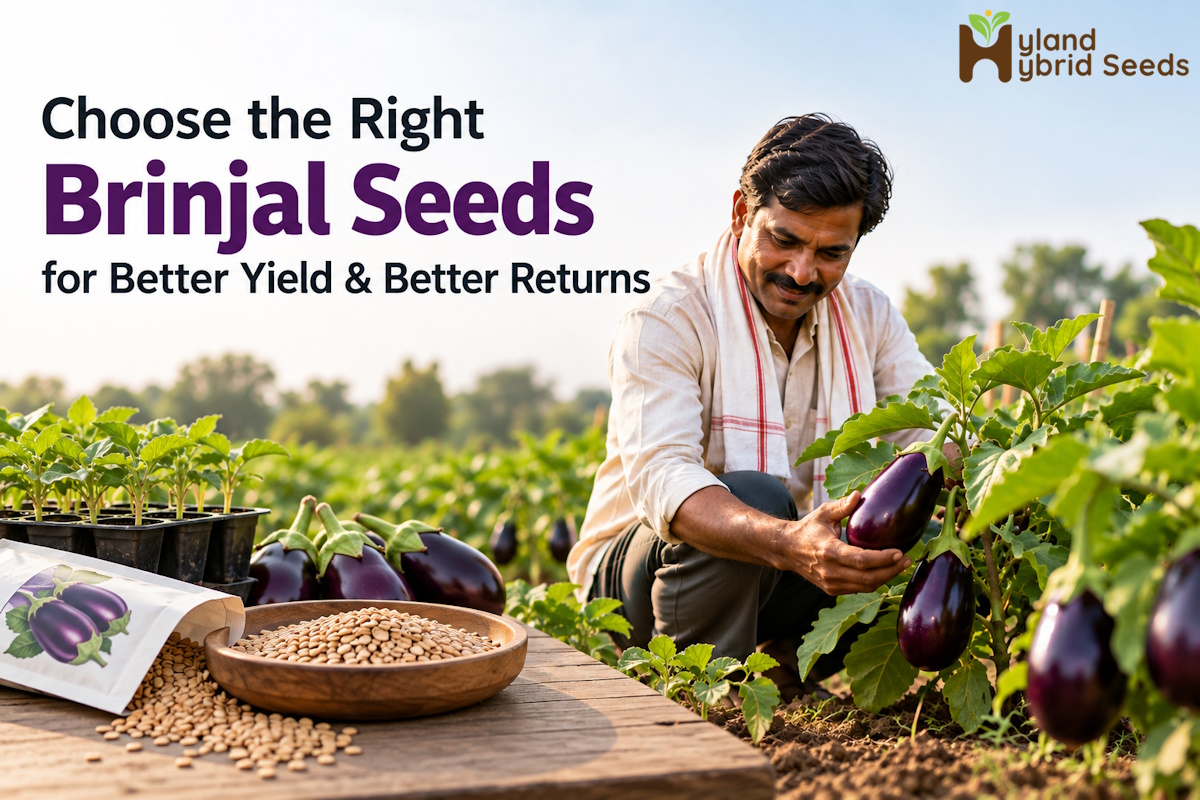
Commercial brinjal cultivation in India presents unique opportunities and significant agronomic challenges. Eggplant is grown across almost every agro-climatic zone in the country, yet farm profitability often varies sharply from one grower to another. A primary reason for this variance is not always field management or fertilizer volume, but the initial genetic choice made before nursery sowing begins. Choosing the best brinjal seeds in India requires a balanced understanding of your specific field conditions, seasonal climate patterns, and local mandi requirements.
When growers invest in high-performing hybrid brinjal seeds, they are securing crop resilience against environmental stress, unpredictable weather, and pest pressures. Because brinjal is harvested in multiple pickings over several months, an unsuitable variety can quickly lead to declining fruit quality, poor marketable yield, and reduced returns. Making an informed choice during brinjal seed selection ensures that every acre planted translates into steady harvests, uniform produce, and reliable commercial income.
Understanding Regional Growing Conditions for Brinjal Cultivation
Every commercial farming region in India features distinct soil characteristics and weather profiles that dictate crop performance. Brinjal plants are sensitive to both waterlogging and extreme cold, meaning that seed selection must always align with local conditions rather than general recommendations.
Soil Texture, Drainage, and Soil Health
Brinjal performs well across a range of soils, from light sandy loams to rich clay loams, provided there is adequate drainage. In heavy black soils common in central and western India, water retention can become a challenge during peak monsoon periods. In such soils, growers need hybrids that establish deep, vigorous root systems capable of handling temporary moisture fluctuations without succumbing to root rot.
Conversely, in lighter sandy soils where nutrient leaching and rapid drying occur, the crop requires varieties that maintain strong vegetative growth under moderate moisture stress. Testing soil pH is equally critical, as brinjal prefers a pH range between 5.5 and 6.8. Planting a sensitive hybrid in alkaline or saline conditions can stunt early development and lower overall productivity.
Temperature and Seasonal Considerations
Successful brinjal cultivation is closely linked to temperature during flowering and fruit setting. While brinjal is a warm-season crop, extreme daytime temperatures exceeding 38 degrees Celsius can lead to blossom drop and poor fruit formation. Similarly, winter drops below 10 degrees Celsius can slow down vegetative growth and cause fruit scarring.
Selecting seeds tailored for specific sowing windows, such as early kharif, rabi, or summer, ensures that the critical flowering phase coincides with optimal climatic conditions. A hybrid that thrives during mild rabi months may struggle with pollen sterility if transplanted during late spring in northern plains.
Aligning Hybrid Seed Selection with Local Market Demand
Yield volume alone does not determine farm profit. In vegetable markets across India, consumer preferences for brinjal vary dramatically by state, district, and even local city mandis. Choosing a hybrid that produces heavy yields of an unwanted shape or color can result in steep price discounts at harvest.
Fruit Shape, Color, and Consumer Preferences
Before purchasing seeds, growers must evaluate the exact market specifications preferred by local buyers and commission agents. In northern states, large oval or round dark purple fruits are often favored for culinary dishes like bharta. In parts of southern and eastern India, consumers actively seek green, variegated, or striped oval types. Western markets frequently prioritize medium-sized, glossy purple-black cylindrical or round fruits.
Understanding every nuance of a brinjal variety before planting avoids post-harvest marketing difficulties. Growers targeting regional wholesale markets must ensure that fruit color remains vibrant and does not fade under hot field conditions.
Calyx Quality, Gloss, and Shelf Life
Marketable quality is determined by visual freshness and post-harvest endurance. Buyers look for a fresh green calyx, smooth skin, and deep glossiness. Fruits that develop a dull appearance shortly after harvest lose commercial value rapidly.
For growers transporting produce over long distances to reach distant urban centers, firm flesh and thick skin are essential traits. Varieties with soft flesh tend to bruise during transit, causing post-harvest losses and lower auction prices.
Disease Tolerance and Crop Stamina in High Yield Brinjal
A major risk in brinjal farming is crop loss from soil-borne pathogens and viral infections. Protecting yield potential begins with selecting hybrids bred to withstand prevalent regional disease pressures.
Managing Bacterial Wilt and Fungal Stresses
Bacterial wilt, caused by Ralstonia solanacearum, represents one of the most devastating challenges in high-moisture and warm environments. Once infected, plants can wilt rapidly within days, leading to massive field losses that cannot be rectified by chemical applications alone. In regions with known wilt history, choosing field-tested, tolerant hybrid brinjal seeds is the primary line of defense.
Similarly, damping-off in the nursery stage and Phomopsis blight on fruit can lower both seedling stand and final harvest quality. Varieties with good canopy aeration and inherent structural resilience reduce the severity of foliar infections throughout the growing cycle.
Continuous Picking and Extended Plant Stamina
Unlike single-harvest crops, brinjal requires consistent vegetative and reproductive balance over several months. Achieving Brinjal Seeds Supplier recommendations for high yield brinjal production depends on the hybrid ability to sustain continuous flushes.
A quality hybrid maintains uniform fruit size from the first picking through the eighth or tenth harvest. Inferior seeds often produce an impressive initial flush followed by small, deformed, or discolored fruits as the plant exhausts its energy reserves.
Evaluating Seed Economics and Return on Investment
Commercial vegetable farmers must view seed purchases as an investment rather than a basic operational cost. The price of seed represents a small percentage of total cultivation expenses, yet it fundamentally determines the ceiling of crop productivity.
Germination Uniformity and Seedling Vigor
High seed purity and reliable germination rates ensure uniform stand establishment in the nursery. Uneven emergence leads to variable seedling maturity, complicating transplanting schedules and field management. Strong seedling vigor allows young plants to establish quickly after transplanting, overcoming shock and developing resistance to early-season sucking pests.
Assessing Seed Price Against Marketable Yield
Farmers often compare prices without factoring in marketable yield per acre. Evaluating the real impact of brinjal seeds price requires calculating the value of premium grade produce generated across all pickings.
A hybrid that produces uniform, blemish-free fruit with good weight and transport stamina consistently commands better prices in wholesale mandis. When seed selection increases the proportion of Grade-A produce while reducing cull rates, the net profit per acre comfortably justifies the initial seed cost.
Common Mistakes to Avoid in Brinjal Seed Selection
Even experienced commercial growers can experience yield gaps due to errors made during variety procurement. Recognizing these common pitfalls helps farmers protect their investment and improve operational consistency.
-
- Planting based solely on neighbor choices: Field conditions, microclimates, and soil pathogen levels can differ significantly between adjacent farms. A variety successful on light soil may underperform on heavy ground nearby.
-
- Prioritizing total fruit count over uniform weight: A plant producing dozens of undersized, unmarketable fruits will yield less revenue than one producing balanced, uniform fruits that meet commercial grade standards.
-
- Ignoring seasonal transitions: Selecting a hybrid unsuited to the changing climate between transplanting and peak harvest can lead to flower drop, poor color retention, and early crop termination.
-
- Overlooking transit durability: Growing tender varieties without firm skin for long-distance markets leads to compression damage and lower prices at destination mandis.
Making the Right Seed Decision for the Coming Season
Selecting the best brinjal seeds in India requires a complete assessment of your farm resources, regional disease history, and commercial targets. Careful planning before sowing eliminates avoidable risks and sets a clear path toward high marketable yields per acre.
Evaluating commercial hybrid options from experienced seed breeders like Hyland Hybrid Seeds allows growers to match field characteristics with stable genetics. By focusing on plant vigor, regional adaptation, and buyer preferences, commercial growers can secure better crop reliability and maximize farm profitability throughout the entire harvest cycle.
Frequently Asked Questions
How do I identify the best brinjal seeds in India for my local soil?
Why does fruit shape and color matter so much in hybrid brinjal seeds?
How does hybrid vigor contribute to high yield brinjal production?
Can higher seed cost be justified for commercial brinjal cultivation?