
Best Hybrid Cotton Seeds for High Yield: Variety Selection Guide for Farmers
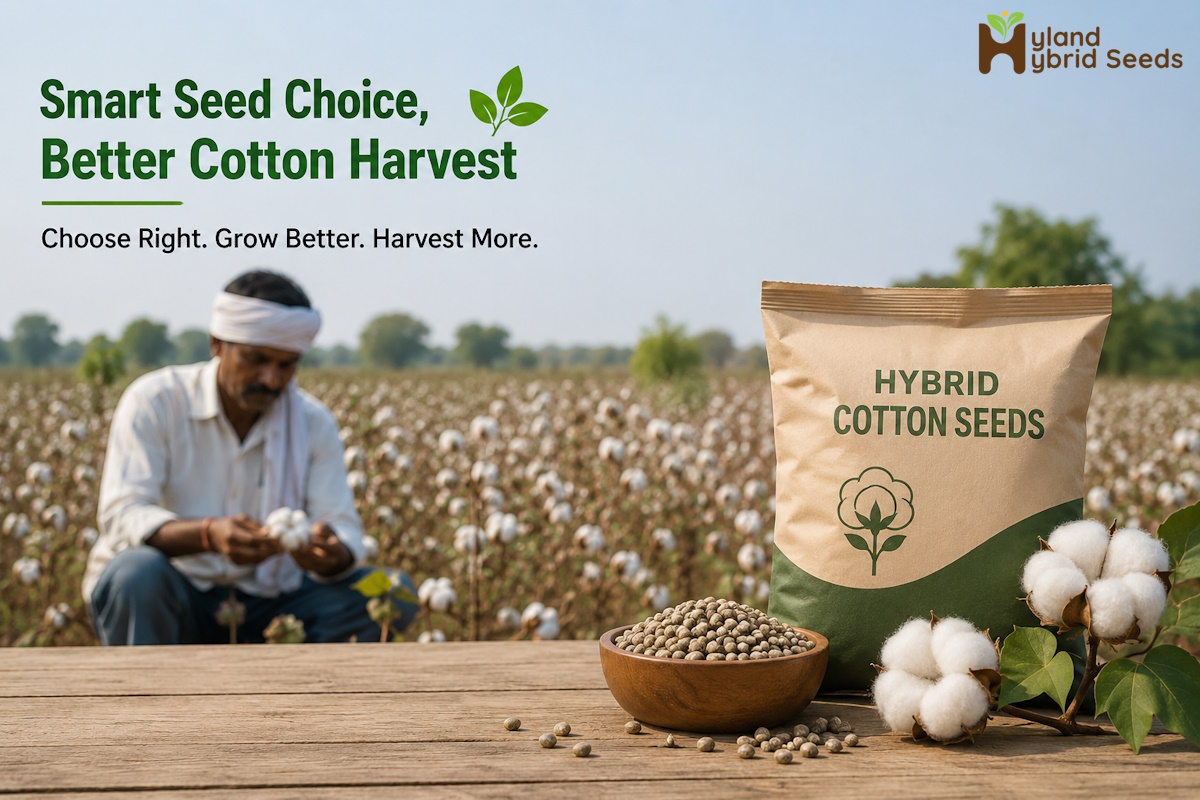 Cotton is one of the most important cash crops for farmers in India. A good cotton crop can provide strong returns, but the final result depends on many factors. Soil condition, rainfall, irrigation, weather, pest control, fertilizer use, and crop management all play an important role. However, one of the first and most important decisions a farmer makes is choosing the right cotton seed.
Selecting the best hybrid cotton seeds can help farmers build a strong base for a healthy and productive crop. A suitable hybrid can support good plant growth, better boll development, and improved yield when it is matched with local soil and weather conditions.
There are many hybrid cotton varieties available in the market, which can make seed selection confusing. A seed that performs well on one farm may not give the same result on another farm. This is why farmers should not select seeds only because a variety is popular or because another farmer received a good yield from it.
Not sure which cotton hybrid is right for your field?
This guide explains how to choose hybrid cotton seeds India farmers can consider based on soil, water availability, crop duration, local conditions, and expected yield.
What Are Hybrid Cotton Seeds?
Hybrid cotton seeds are produced by crossing selected parent cotton lines to bring useful traits together in the next generation. The aim is to develop plants with a good combination of characteristics such as plant strength, boll formation, maturity period, fibre quality, and yield potential.
Different hybrids are developed for different growing conditions. Some may be more suitable for irrigated farms, while others may perform better under rainfed conditions. Certain hybrids may suit black cotton soil, while others can be a better choice for medium or lighter soils.
Because of these differences, there is no single hybrid that can automatically be called the best choice for every farmer.
The best hybrid cotton seeds are the ones that match the farmer’s field conditions and can perform reliably under the local climate and farming system.
Why Choosing the Right Cotton Seed Matters
Seed selection affects the crop from the beginning of the season until harvest. Good quality seed with suitable traits can support proper germination and help farmers maintain a healthy plant population.
The choice of hybrid also affects how the crop responds to available moisture, nutrients, weather, and farm management. A hybrid that is not suitable for local conditions may struggle even when the farmer follows good farming practices.
For example, a hybrid that needs regular irrigation may not be a good choice for a farm that depends mainly on rainfall. In the same way, a long-duration hybrid may create problems in an area where the growing season is short or water becomes limited later in the season.
Farmers should therefore consider the complete growing environment before buying seed.
Important Cotton Seeds Benefits for Farmers
Understanding cotton seeds benefits can help farmers make a more informed choice. The benefits of a suitable hybrid are not limited to yield alone.
Depending on the variety and growing conditions, a well-selected hybrid may provide:
- Good germination when quality seed is used and sowing conditions are suitable
- Healthy and uniform plant growth
- Suitable boll size and boll setting
- Better use of available water and nutrients
- A maturity period that matches the local growing season
- Fibre characteristics suitable for the target market
- Better yield potential under recommended crop management
These cotton seeds benefits depend heavily on selecting a hybrid suitable for the farm. Seed quality is important, but soil health, irrigation, nutrition, weed control, and pest management are also necessary for good results.
Choose Soil Based Cotton Seeds
One of the best ways to narrow down seed options is to understand the soil in your field.
Selecting soil based cotton seeds means choosing a hybrid whose growth pattern and requirements match the soil type, soil depth, drainage, and moisture-holding capacity of the farm.
Deep Black Soil
Deep black soils generally have a high capacity to hold moisture. In areas with suitable rainfall or irrigation, farmers may consider hybrids recommended for longer growing conditions and strong plant development.
However, drainage is important. Water should not remain around the roots for a long period because excess water can affect plant health.
Medium Black Soil
Medium black soil is common in many cotton-growing areas. Farmers should look for hybrids recommended for the local rainfall pattern and available irrigation.
If water is limited, choosing a hybrid that fits the expected moisture availability can be safer than selecting one that needs a longer period of regular water supply.
Light or Shallow Soil
Light and shallow soils usually hold less water. Moisture can disappear faster, especially during hot and dry periods.
In such fields, farmers should carefully check the recommended duration and water needs of the hybrid. A variety suited to local rainfed conditions may be a better choice than a hybrid that requires high moisture for a long growing period.
A soil test before sowing can also provide useful information about soil pH and nutrient levels. This makes soil based cotton seeds selection more practical because farmers can combine seed choice with a better nutrient plan.
Want help choosing cotton seeds based on your soil and irrigation conditions?
Rainfed vs Irrigated Cotton Seed Selection
Water availability is another major factor when selecting hybrid cotton seeds India farmers can grow successfully.
Rainfed Cotton
For rainfed farms, rainfall is the main source of water. The crop may experience dry periods during the season, so farmers should choose hybrids officially recommended for local rainfed conditions.
The expected start and end of the rainy season should also be considered. A hybrid should have enough time to complete its important growth stages within the normal moisture period of the region.
Irrigated Cotton
Farmers with reliable irrigation may have more flexibility in variety selection. They can consider hybrids recommended for irrigated cultivation and manage irrigation according to crop stage, soil condition, and local advice.
However, having irrigation does not mean that more water always produces more cotton. Over-irrigation can create poor soil aeration, nutrient loss, and root problems. Proper scheduling remains important.
Check Crop Duration Before Buying Seeds
Cotton hybrids can differ in their maturity period. This is important because crop duration should fit the local climate and farming schedule.
Farmers should ask a few simple questions before selecting a hybrid:
Will enough water be available throughout the main crop period? When does the rainy season normally end? Is another crop planned after cotton? Does the area face late-season pest pressure? How long does the recommended hybrid normally take to mature under local conditions?
The answers can help farmers decide whether an early, medium, or longer-duration hybrid is suitable.
Choosing the best hybrid cotton seeds is not about selecting the longest-duration or fastest-growing variety. It is about choosing a crop duration that matches the farm.
Understand Cotton Yield Per Acre
Cotton yield per acre is one of the first things farmers want to know when comparing seed varieties. However, yield should never be judged only from the number printed in an advertisement or mentioned by another grower.
Actual cotton yield per acre can change because of several factors, including:
- Seed quality and germination
- Soil fertility
- Sowing time
- Rainfall and irrigation
- Plant population and spacing
- Nutrient management
- Weed control
- Pest and disease pressure
- Weather during flowering and boll development
- Picking and crop management practices
A hybrid may have high yield potential, but reaching that potential requires suitable field conditions and proper crop care.
Farmers should compare local trial results and recommendations rather than depending only on maximum yield claims. Performance over more than one season is often more useful than one unusually successful crop.
Look at Local Performance
Local performance is one of the most useful factors when choosing cotton seed.
India has different cotton-growing regions, and conditions can vary greatly between states, districts, and even nearby villages. Rainfall, temperature, soil depth, irrigation access, and pest pressure may all be different.
When comparing hybrid cotton seeds India, farmers can check performance data from agricultural universities, government agriculture departments, Krishi Vigyan Kendras, authorised seed suppliers, and reliable local field demonstrations.
Talking with experienced farmers in the same area can also provide useful practical information. However, it is better to compare results from several farms rather than making a decision based on one person’s experience.
Check Seed Quality and Source
Even a suitable hybrid may perform poorly if the seed is old, damaged, fake, or stored incorrectly.
Farmers should purchase cotton seed from authorised and trusted sellers. Before buying, check the seed packet carefully.
Look for the variety or hybrid name, producer details, batch information, packing details, validity information, required certification or label information, and instructions provided by the seed company.
Keep the bill after purchase. Farmers should also avoid buying loose seed from an unknown source simply because it is cheaper.
The best hybrid cotton seeds should come from a reliable source and should be suitable for the intended growing region.
Consider Pest and Disease Conditions
Pest and disease pressure can differ between cotton-growing regions and from one season to another. Farmers should consider common local problems when selecting a hybrid.
Seed selection alone cannot replace proper pest management. Regular field monitoring is important throughout the season.
Farmers should follow local agricultural advice for pest identification and control. Unnecessary or poorly timed pesticide sprays can increase cultivation costs and may harm useful insects.
Where approved varieties offer relevant traits for local pest conditions, farmers should understand exactly what those traits can and cannot do. No seed should be treated as a complete solution for every pest or disease.
Do Not Choose Seeds Based Only on Price
Seed price is important, especially when cultivation costs are rising. But choosing the cheapest seed may not always reduce total farming costs.
At the same time, an expensive seed packet does not guarantee a high yield.
Farmers should compare value rather than price alone. Consider local suitability, seed quality, expected crop duration, water requirements, field performance, and recommendations from reliable agricultural sources.
A well-matched hybrid can be more valuable than a popular hybrid that does not suit the farm.
How to Select the Best Hybrid Cotton Seeds
Before making the final purchase, farmers can follow a simple selection process.
First, identify the soil type and understand its water-holding capacity. A soil test can provide additional information.
Second, decide whether the crop will be mainly rainfed, partially irrigated, or fully irrigated.
Third, check the normal rainfall pattern and length of the growing season in the area.
Fourth, shortlist hybrids officially recommended or commonly tested for those local conditions.
Fifth, compare crop duration, plant growth, boll characteristics, fibre quality, and local yield performance.
Sixth, check results from more than one farm or trial whenever possible.
Finally, purchase genuine seed from an authorised source and follow the recommended sowing and crop management practices.
This approach makes it easier to identify the best hybrid cotton seeds for a particular farm rather than simply choosing the most advertised variety.
Seed Selection Should Be Part of a Complete Crop Plan
Good seed is only the starting point. To improve cotton yield per acre, farmers need to manage the entire crop carefully.
Timely sowing, suitable spacing, balanced nutrition, irrigation management, weed control, pest monitoring, and timely picking all contribute to the final result.
Farmers should also avoid using the same management plan for every field. A deep black soil field may require different irrigation and nutrient management from a shallow soil field.
This is why the idea of soil based cotton seeds should be connected with soil-based crop management as well.
Final Thoughts
Choosing cotton seed should be a planned decision, not a last-minute purchase.
The best hybrid cotton seeds are not necessarily the most expensive, most advertised, or most widely used varieties. The best choice is a genuine, locally suitable hybrid that matches the farm’s soil, water availability, growing season, and management conditions.
When evaluating hybrid cotton seeds India, farmers should focus on local recommendations, reliable field performance, crop duration, seed quality, and suitability for rainfed or irrigated farming. Understanding cotton seeds benefits is useful, but farmers should also remember that seed alone cannot guarantee high production.
For better cotton yield per acre, combine suitable seed selection with soil testing, timely sowing, balanced nutrition, proper water management, regular field monitoring, and responsible pest control.
Most importantly, select soil based cotton seeds according to actual field conditions and use recommendations from local agricultural experts and official sources. A careful decision before sowing can give the cotton crop a much stronger start and help farmers work toward stable, profitable production.
Ready to choose the best hybrid cotton seeds for your farm?
Frequently Asked Questions
How do I choose the best hybrid cotton seeds for my farm?
Which hybrid cotton seeds are suitable for different soil types?
What are the main cotton seeds benefits for farmers?
How much cotton yield per acre can a farmer expect?