
How to Select High Yield Wheat Seeds for Your Farm
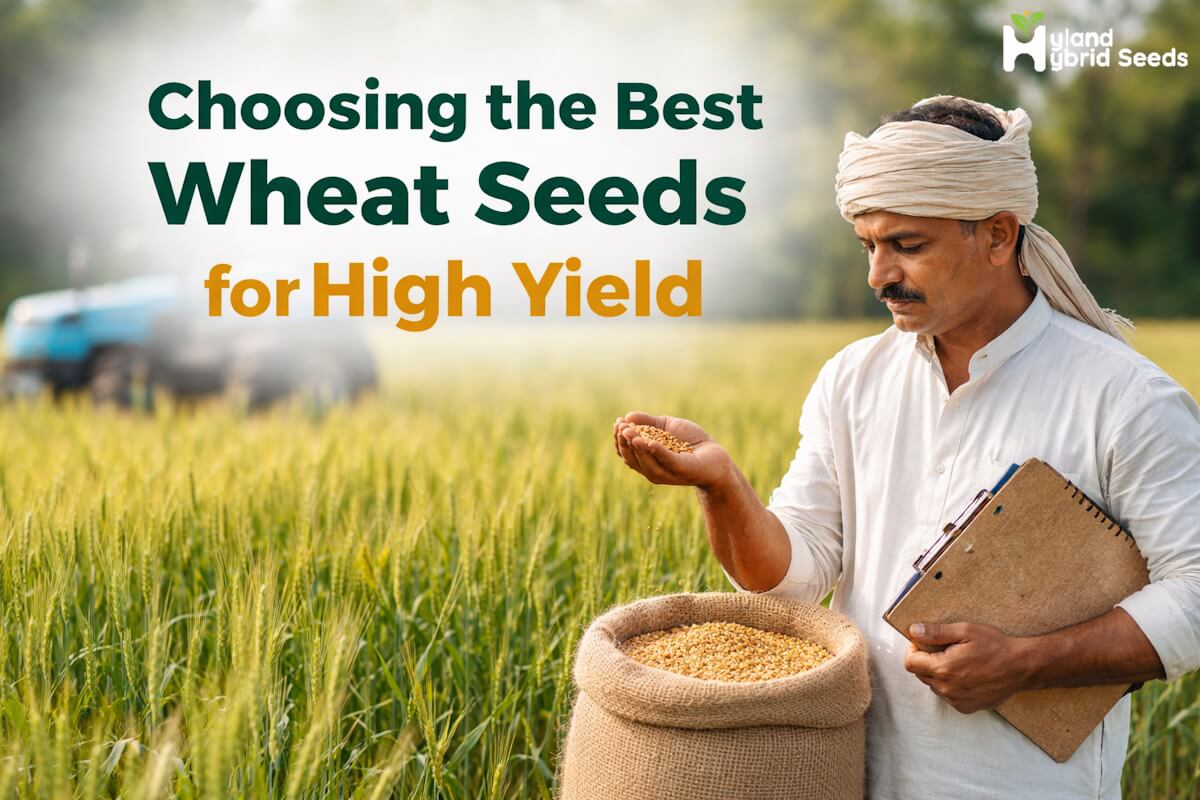
Choosing wheat seed is not a small decision. Once it goes into the soil, you live with that choice for the whole season. Your weather, soil, irrigation, money, and time all get tied to it. If the seed does not match your farm conditions, no amount of late fixing can fully recover the loss.
Most farmers are not chasing record yield. You are looking for stable grain, acceptable quality, and a crop that does not surprise you at harvest time. This guide is written to help you judge wheat seeds with that mindset.
If you want to discuss your local conditions before deciding, you can Ask Experts early. A short conversation often saves one full season of regret.
Not sure which wheat seed fits your soil and water situation?
What “High Yield” Really Means in Wheat Farming
Many farmers hear the term “high yield” and think of one thing: more bags per acre. On real farms, yield has more than one meaning.
For wheat growers, high yield should mean:
- Grain output that stays steady across normal weather ups and downs
- Acceptable test weight and grain filling
- A crop that does not collapse under stress
A wheat variety that gives 55–60 quintals in one perfect year and drops to 35 in a dry or cold year may look good on paper. A variety that gives 45–48 consistently may leave more money in your pocket over time.
Before selecting any high yield wheat variety, ask yourself: do I want peak yield or repeatable yield?
Start With Your Soil, Not the Seed Bag
This matters because wheat roots and tillers react fast to soil problems. If soil is wrong, even the best seed struggles.
Soil Texture and Drainage
- Loamy to clay-loam soils support most wheat varieties well
- Heavy clay soils hold water longer, increasing disease and lodging risk
- Sandy soils lose moisture fast and need strong irrigation planning
If your field stays wet after irrigation or rain, avoid varieties known for tall straw and weak stems. Lodging can wipe out grain quality even if plant growth looks strong.
Soil Fertility History
Fields with uneven fertility push wheat plants to grow unevenly. Some tillers dominate, others fail. Varieties that rely on heavy fertilizer response may disappoint on such land.
If your soil fertility varies block to block, lean toward varieties known for balanced tillering rather than aggressive vegetative growth.
Climate Fit: The Biggest Yield Decider You Cannot Control
You can change fertilizer, spacing, or spray timing. You cannot change temperature patterns once sowing is done.
Temperature During Critical Stages
Wheat yield depends heavily on:
- Cool weather during tillering
- Mild temperature during flowering
- No sudden heat during grain filling
In many parts of India, late heat waves in February or March shorten grain filling. In such areas, early to medium duration varieties often perform better than long duration ones, even if brochure numbers say otherwise.
Rainfall and Humidity
Rain-fed wheat needs different traits than fully irrigated wheat.
- Dry zones need strong root systems and faster maturity
- Humid zones need disease tolerance more than height or leaf size
If you farm in areas with fog and winter humidity, rust pressure matters more than headline yield numbers.
Irrigated vs Rain-Fed Wheat: Choose Honestly
This question decides half your success. Many failures come from planting irrigated-type seeds in fields that miss one irrigation.
Fully Irrigated Fields
You can consider:
- Varieties with higher nutrient response
- Slightly longer duration crops
- Higher tillering potential
Even here, missing irrigation at crown root initiation or grain filling cuts yield sharply.
Rain-Fed or Limited Irrigation Fields
You need:
- Faster early growth
- Strong root anchoring
- Moderate plant height
Hybrid wheat seeds are sometimes discussed for such conditions, yet results vary widely by region. If water supply is uncertain, stability matters more than potential.
If you are unsure which category your field truly fits, Contact Us to talk through it before buying seed.
Hybrid Wheat Seeds: Where They Help and Where They Don’t
Hybrid wheat seeds attract attention because of promised vigor. Some farmers see benefit. Others feel disappointed.
Hybrid wheat tends to:
- Perform better under controlled irrigation
- Respond more to good fertility
- Cost more upfront
They may not suit:
- Low-input farms
- Fields with uneven soil
- Farmers saving seed for next season
If seed cost forms a large part of your total expense, calculate risk carefully. Higher input seeds need higher management discipline.
If you need clarity before sowing, get in touch for practical guidance.
Yield Stability Beats One-Time High Yield
This matters because wheat prices do not always reward extra grain. Costs are real every season.
Ask dealers and advisors:
- How does this variety perform in bad years?
- Does it lodge under wind or late rain?
- How sensitive is it to delayed sowing?
A variety that tolerates small mistakes often suits small and medium farmers better than one that needs perfect timing.
Pest and Disease Pressure: Silent Yield Killers
Disease rarely wipes out the crop overnight. It slowly eats yield and quality.
Common Issues to Watch
- Rusts in humid and fog-prone areas
- Aphids during mild winters
- Termite pressure in light soils
Seed tolerance does not mean immunity. It means damage stays manageable. Avoid varieties known to need frequent sprays unless you already follow strict crop monitoring.
Input Cost Reality: Count Everything Before You Decide
High yield wheat variety selection should match your spending capacity.
Costs include:
- Seed price
- Fertilizer quantity
- Irrigation fuel or electricity
- Plant protection
A variety that needs more nitrogen and sprays must return that cost through stable grain. If wheat is not your primary income crop, avoid seeds that push expenses high.
Common Ways Farmers Lose Money With Wheat Seeds
These mistakes show up every season:
- Choosing seed based only on last year’s neighbor yield
- Ignoring sowing window suitability
- Planting tall varieties in high wind zones
- Overapplying nitrogen to weak-stem varieties
Most seed failure stories are management mismatch stories.
What Type of Farmer Should Avoid “High Yield” Claims
This section matters because not every farm needs the same approach.
You should be cautious if you:
- Depend mainly on rainfall
- Cannot irrigate on time
- Farm highly variable soils
- Prefer saving seed
In such cases, older stable varieties sometimes protect income better than newer aggressive ones.
Role of a Wheat Seeds Supplier: Ask the Right Questions
A wheat seeds supplier should help you judge fit, not push volume.
Ask them:
- Where has this variety failed?
- What sowing mistakes hurt it most?
- How does it react to late irrigation?
If answers sound vague, walk away. Seeds are cheaper than one season of lost yield.
If you want neutral guidance before buying, Ask Experts mid-way through your decision process.
Sowing Time and Plant Population Matter More Than Seed Name
Even the right seed fails if planted wrong.
General ranges many farmers follow:
- Sowing window: early to mid-season works best for most regions
- Seed rate: varies by grain size and tillering habit
- Spacing: affects air flow and disease
These are ranges, not rules. Local conditions decide final numbers.
Making the Final Decision: Match Seed to Your Reality
Before you buy, answer these honestly:
- Can I give this crop water when it needs it?
- Can my soil support its growth style?
- Can I absorb the cost if yield drops?
If the answer to any is no, adjust your choice. There is no shame in choosing a safer option.
For last-mile clarity, you can Contact Us and talk through your field conditions before committing.
Decide With Confidence, Not Hope
Wheat farming rewards patience and honest assessment. High yield wheat variety selection is not about chasing labels. It is about matching seed behavior with your land, climate, and risk comfort.
If you choose a seed that fits your farm, even an average year feels manageable. If you choose a seed that fights your conditions, even a good year feels stressful.
Certainty beats excitement every time.
Clear advice makes seed selection easier, especially when weather and input costs are uncertain.
FAQs
What makes a wheat variety “high yield” in real farming?
Are hybrid wheat seeds suitable for all Indian farmers?
How do I judge if a wheat seed suits my soil?
Should I trust claims made by a wheat seeds supplier?