
Most Profitable Vegetables to Grow with Hybrid Seeds in India
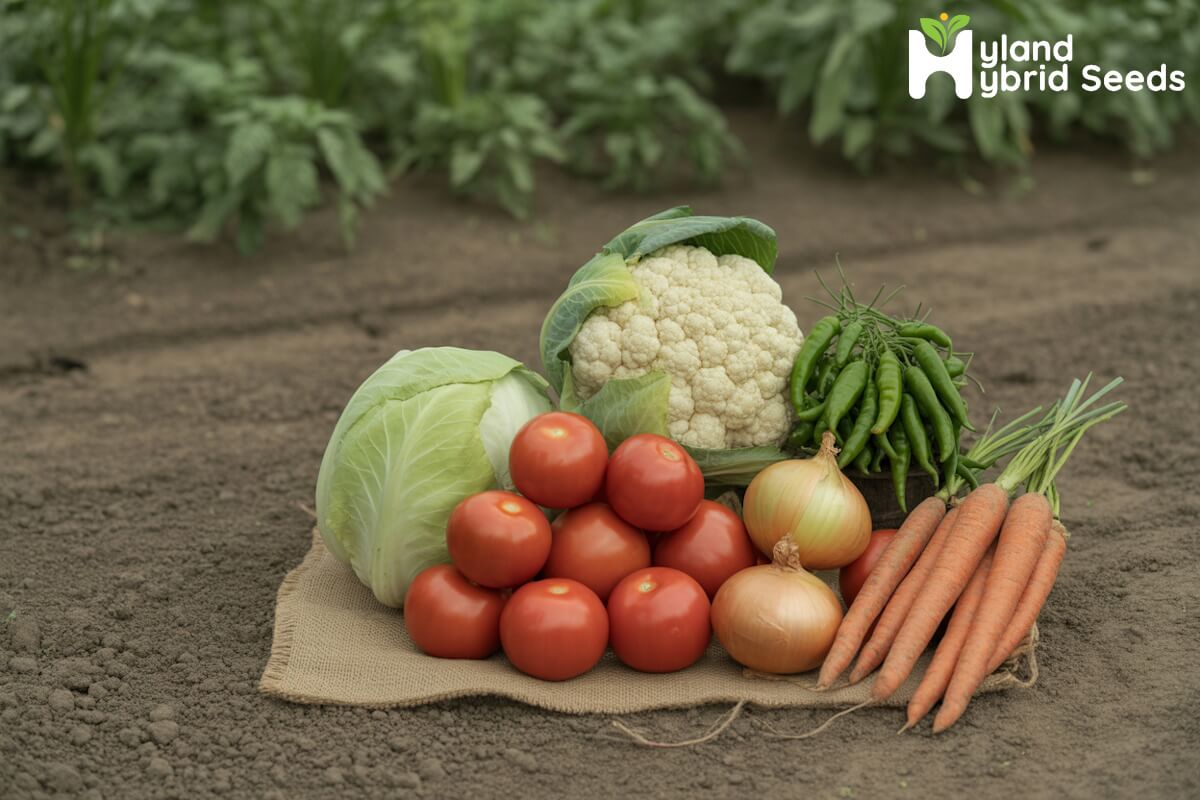
Farmers across India chase one goal: grow crops that pay back well. Prices change, weather plays tricks, and pests never take a holiday. In the middle of all this, one thing has made a huge difference in the last decade—hybrid seeds. Farmers who were once stuck with low-yield crops are now shifting to hybrid vegetables because they mature faster, bring better sizes and shapes, handle stress better, and sell at premium rates.
If you want to focus on profitable vegetables, hybrid seed farming is a solid road to better income. You don’t need guesswork. You just need the right crop choice, reliable seed quality, and basic care.
This guide keeps things practical. No theory. No big claims. Just real vegetables farmers in India grow and earn from—especially the ones supplied by a reliable hybrid seeds supplier.
Let’s talk business.
Choose vegetable seeds trusted by thousands of farmers across India.
Why Hybrid Vegetables Pay Better
Vegetables stand out because they give quick returns. Unlike long-season crops, most vegetables complete their cycle faster. A farmer can get multiple harvests in a year, which means faster income flow. Hybrid seeds take this even further by improving:
-
- Yield
-
- Size and uniformity
-
- Shelf life
-
- Pest and disease tolerance
-
- Market appeal
Customers will pay more for shine, shape, color, and freshness. So, when hybrid seeds produce cleaner, presentable vegetables, it directly increases earnings.
Let’s look at profitable vegetables farmers prefer across India.
1. Hybrid Tomato: Always in Demand
Tomatoes never go out of the market. Every household, restaurant, hotel, and food processing company needs them. Hybrid tomatoes bring:
-
- Higher yield
-
- Smooth and firm fruits
-
- Better shelf life
-
- Stronger plants
Some farmers grow them in open fields, others use polyhouses or net houses for better control. When fruits look uniform, traders are willing to pick entire lots without long negotiations.
A good vegetable seeds supplier usually offers hybrid tomato seeds that resist wilt, virus infections, and cracking. That saves farmers from sudden losses. If a farmer wants consistent profit, tomatoes stay in the top list of profitable vegetables every season.
2. Hybrid Chilli: Spice That Sells
Green chilli is a high-margin crop. In many states, especially Andhra Pradesh, Karnataka, and Maharashtra, chilli farming supports thousands of farmers.
Hybrid chilli seeds help with:
-
- More flowers and fruit set
-
- Uniform green color
-
- Longer shelf life
-
- Better tolerance against pests like thrips and mites
Fresh chilli prices shoot up quickly in off-season periods. Some hybrid varieties even handle rain and heat better, giving farmers stability when weather becomes unpredictable. Whether sold green or dried later, chilli is among the most profitable vegetables for commercial farmers.
3. Hybrid Onion: High Return from Storage
Onions are not just a vegetable—they are a trading product. When stored well, farmers can hold stock and wait for better prices. Hybrid onion seeds help farmers get:
-
- Bigger bulbs
-
- Uniform color
-
- Higher survival rate in tough climates
-
- Stronger shelf life
Rabi onions especially fetch great money if stored and sold when supply drops. Every year, thousands of farmers earn more only because hybrid varieties allow them to wait and sell later without spoilage.
4. Cauliflower: Fast Maturity and Heavy Heads
Cauliflower fits well into winter farming and gives quick returns. With hybrid cauliflower seeds, farmers observe:
-
- Bigger heads
-
- Compact structure
-
- White color
-
- Less disease damage
Wholesale buyers prefer uniform heads because it makes packing and transport easier. That means faster pickup from the farm gate. Many vegetable mandis give higher rates to clean and snow-white cauliflower, and hybrid seeds are the easiest way to get that quality.
5. Cabbage: Strong Market Demand
Cabbage grows across India and has steady buyers: households, hotels, street vendors, restaurants, hostels, and school kitchens. Farmers growing hybrid cabbage notice:
-
- Tight, heavy heads
-
- Faster maturity
-
- Resistance to common pests
-
- Uniform shape
Since it grows in large volumes per acre, farmers can earn profit even in local markets without long-distance transport. This makes cabbage a practical choice for small farmers who want lower risk and steady income.
6. Bitter Gourd: Good Rates, Even Better in Off-Season
Bitter gourd is a dependable cash crop. Hybrid bitter gourd seeds help with:
-
- High fruit count
-
- Dark color
-
- Glossy skin
-
- Long picking cycle
Traders love bitter gourd that stays fresh during travel, and hybrid varieties handle it better. In many regions, especially near cities, bitter gourd sells at premium rates when supply is low. This single factor pushes it into the list of profitable vegetables for commercial vegetable growers.
7. Sponge Gourd: Quick Harvest, Good Profit
Sponge gourd is a fast grower. Many farmers take harvest every few days, which means regular income through the season. Hybrid sponge gourd seeds give:
-
- Straight fruits
-
- Attractive green skin
-
- Better yield per plant
-
- Long picking window
Even when market prices fluctuate, regular harvesting helps farmers maintain cash flow.
Not sure which vegetable will bring the best profit in your region?
8. Muskmelon: Profits in Summer
Muskmelon does great in sandy, well-drained soil with warm temperatures. Hybrid muskmelon seeds produce:
-
- Sweet, aromatic fruits
-
- Good size
-
- Strong netting (preferred in markets)
-
- Better shelf life for transport
Farmers near urban cities or highways earn even more due to fast movement. Summer demand is high because people want refreshing fruits. When supply drops, muskmelon prices increase sharply.
9. Watermelon: Higher Weight = Higher Earnings
Watermelon gives farmers direct profit based on fruit size and sugar content. Hybrid watermelon seeds help growers achieve:
-
- Higher fruit weight
-
- Better sweetness
-
- Thick rind for transport
-
- Uniform shape
Trucks loaded with watermelon travel long distances. Hybrid varieties survive travel without cracking. Farmers selling directly to wholesalers earn strong margins.
10. Carrot: Straight Roots, Better Rates
Carrot prices depend on shape and smoothness. Hybrid carrot seeds produce:
-
- Uniform roots
-
- Bright color
-
- Good crunch
-
- High yield
Cleaning and grading become easier, which attracts buyers. Farmers near processing units or cold regions grow carrots for very high profit swings when supply drops.
11. Coriander: Fast Money Crop
Coriander doesn’t take months. In a short duration, farmers can harvest leaves and sell quickly. Hybrid coriander seeds give:
-
- Higher leaf density
-
- Better aroma
-
- Strong stems
-
- Quick regrowth
Many farmers run coriander as a supplementary crop for steady income.
12. Fenugreek: Popular Winter Herb
Fenugreek sells fast in local mandis because every household uses it. Hybrid fenugreek seeds bring:
-
- Faster germination
-
- Dense leaves
-
- Strong green color
-
- Fewer gaps in the field
Some farmers also harvest seeds later for better rates.
13. Cluster Beans and Cowpea: Low Water, Good Income
In semi-arid areas, farmers don’t always have irrigation support. For them, hybrid cluster beans and cowpea act like money-savers:
-
- Less water requirement
-
- Long picking cycles
-
- Consistent yield
-
- Good market demand
Vegetable vendors buy them daily because city kitchens use them regularly. A single acre can give many pickings, which adds up to solid income.
So Which Vegetable Is Best?
There’s no single answer. Profit depends on:
-
- Your soil
-
- Water availability
-
- Market distance
-
- Season
-
- Demand in your area
Tomato, chilli, onion, cabbage, cauliflower, bitter gourd, muskmelon, watermelon, carrot, coriander, cluster bean, and cowpea are proven profitable vegetables. Farmers across India grow them because hybrid seeds give higher success rates compared to open-pollinated seeds.
If you’re planning to start new crops, test small sections of your field first. Watch germination, growth, and market response. Once you get a feel for it, scale up.
Choosing the Right Hybrid Seeds Supplier Matters
Just buying any packet labeled “hybrid” won’t help. Seed quality decides yield. A trusted hybrid seeds supplier provides:
-
- Good germination rate
-
- Disease tolerance
-
- Region-suitable varieties
-
- Post-sale support
-
- Authentic packaging
A reliable vegetable seeds supplier also guides farmers on sowing methods, spacing, fertilizer needs, and pest control. That support reduces risk and builds confidence.
So if you’re trying to grow profitable vegetables, pick seeds that are tested for Indian soil and climate—not random varieties pushed in the market.
A Better Way To Earn From Vegetables
Growing profitable vegetables is a smart choice when seeds, care, and timing align. If you plan your season well, even a small farm can bring strong income. Think about:
-
- Local demand
-
- Festival seasons
-
- Hospital and hotel supply
-
- Direct selling in nearby towns
Vegetable farming gives flexibility. Some crops harvest every two days, some in one month, some after storage. Mixing them reduces risk.
Wrapping It Up (Without Calling It a Conclusion)
Farmers want crops that pay well and survive challenges. Hybrid seeds make that possible. Tomato, chilli, onion, cabbage, cauliflower, bitter gourd, sponge gourd, muskmelon, watermelon, carrot, coriander, fenugreek, cluster beans, and cowpea all fall into the category of profitable vegetables grown across India.
If you pick the right hybrid seeds supplier or vegetable seeds supplier, half the battle is already won. The rest is simple care and good timing. Try one or two new hybrid varieties each season. Track the results. You might be surprised how much difference the right seed makes.
Ready to grow profitable vegetables this season? Choose best hybrid seeds from reliable supplier.