
Hybrid Tomato vs Local Tomato: Yield, Taste, Durability and Market Demand
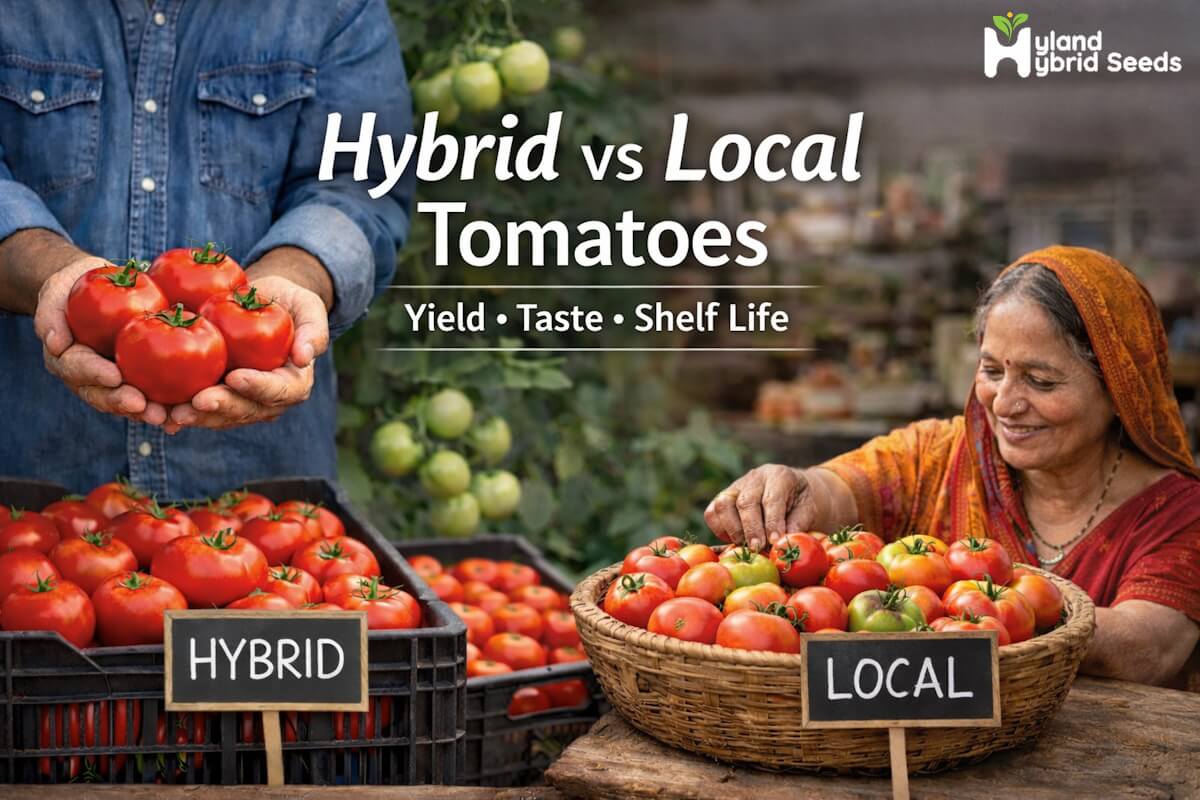
Walk into any vegetable market, and you’re bound to see rows of shiny, plump tomatoes. Some are firm and bright red. Others have irregular shapes and softer skin. One bunch probably comes from hybrid tomato seeds. The other? Likely local, or “desi” tomatoes. But which one’s better? Depends on what you’re after. Let’s unpack the differences in yield, taste, shelf life, and market demand between hybrid tomatoes and local ones. Whether you’re a farmer, wholesaler, or someone curious about where your food comes from, this might help you make more informed decisions.
1. Yield: Quantity vs Consistency
Here’s the deal. When it comes to yield, hybrid tomatoes are usually the front-runners. That’s one of the reasons they were created in the first place. Hybrids are bred to produce more tomatoes per plant. The fruits are uniform, and the chances of disease wiping out the crop are lower. If you’re running a farm that needs predictable results, these are hard to beat. Local tomatoes, on the other hand, are unpredictable. You might get a good harvest one season and not so much the next. That said, in certain soil and weather conditions, local varieties can surprise you. So in the hybrid tomato vs local tomato yield contest, hybrids usually take the win. Especially if consistency is your goal.
Confused about hybrid vs local tomato choices? Our agri-experts can help you make the right call.
Ask Experts2. Taste: Bold or Bland?
This is where local tomatoes make a comeback. Ask any home cook or street vendor what tomato they prefer for chutneys, curries, or sauces. More often than not, they’ll point to the local ones. The flavor is deeper, tangier, and more complex. Some even say local tomatoes smell better when you slice them open. Hybrid tomatoes? Not so much. They’re bred more for looks and shelf life than taste. Many of them are watery or mildly sweet, but they lack that punchy tomato flavor. Ever bitten into a store-bought tomato that looked perfect but tasted flat? Chances are, it was a hybrid. So if taste is a priority, especially for fresh cooking or traditional dishes, local tomatoes come out on top.
3. Durability: Which One Lasts Longer?
This is a big one for anyone involved in transportation or exports. Hybrid tomatoes were designed to handle rougher treatment. The skin is thicker. The shape is uniform. That means they can be packed, shipped, and stored with fewer losses. Whether you’re sending them across the state or exporting them overseas, they hold up better. Local tomatoes? Not so much. They’re softer, bruise more easily, and spoil quicker. This makes them trickier to store and ship over long distances. So, if you’re dealing with logistics and supply chains, hybrids are the safer bet.
4. Market Demand: What Sells More?
Depends on who you’re selling to. Big retailers, supermarkets, and food processing units usually prefer hybrid tomatoes. The consistent shape, color, and shelf life fit their operations. Plus, when you’re processing tons of tomatoes into puree or ketchup, flavor takes a backseat to quantity and stability. But local markets, smaller grocers, and restaurants with traditional menus still have love for the local variety. Street vendors and home cooks often ask for “desi tamatar” because they know it adds better flavor to the food. There’s demand for both, but the crowd you’re selling to will make all the difference.
5. Farming Challenges and Input Costs
Now let’s talk about what it takes to actually grow these tomatoes. Hybrid tomato seeds are more expensive. You usually have to buy new seeds every season because hybrid varieties don’t reproduce true to type. That means if you save seeds from your hybrid crop, the next season’s yield might be all over the place. That’s where the hybrid tomato seeds supplier matters. Choosing a trusted supplier ensures you get quality seeds with better germination rates and resistance to common diseases. Local tomato seeds, on the other hand, are more forgiving. Farmers often save seeds season after season, making them more cost-effective in the long run. They’ve also adapted naturally to local pests and climate, which can reduce your pesticide and fertilizer bills. So if you’re tight on budget or prefer traditional methods, local might be the way to go.
6. Environmental Impact
There’s an ongoing conversation about sustainability. Hybrid farming often involves chemical fertilizers, regular irrigation, and pesticides. These inputs can affect the soil over time if not managed well. Local varieties, especially when grown traditionally, tend to be more in tune with the natural environment. They don’t always need heavy chemical input, and some are drought-resistant or pest-tolerant by nature. So if sustainable farming is your thing, local tomatoes give you a head start.
Looking for a reliable hybrid tomato seeds supplier?
Get in touch7. Shelf Life and Storage
Let’s keep this short. Hybrids stay firm and good-looking for longer. They can sit on supermarket shelves for days without going bad. Local tomatoes? Not so much. They go soft quicker, and you’ve got a narrower window to sell or consume them. Again, if you’re running a store or distributing to other regions, that extra shelf life can make or break your profits.
8. Seed Availability and Access
Finding good hybrid tomato seeds isn’t hard. There are dozens of brands out there. But not all are reliable. Some may promise disease resistance and high yield but fall short in real-world conditions. That’s where choosing the right hybrid tomato seeds supplier becomes important. Go for one that has transparent product info, real field test results, and customer support. Some even help with growing tips based on your region. If you’re buying local seeds, many farming communities still trade them informally. That works well in areas where traditional farming is still strong. But if you’re entering the market new, it might take effort to find a reliable local strain that suits your land and weather.
So, Which One Should You Grow?
There’s no one-size-fits-all answer. If you’re a commercial farmer aiming for large-scale production and wide distribution, hybrids are the safer bet. They give you predictability, better shelf life, and easier transport. You just have to be ready to invest in quality hybrid tomato seeds and possibly depend on a regular hybrid tomato seeds supplier. If you’re a small-scale grower focused on taste, organic methods, or supplying niche markets, local tomatoes make a lot of sense. You’ll stand out for quality, not quantity. Some farmers even grow both. They use hybrid tomatoes for mass sales and keep local ones for regular customers who know what good flavor means.
Final Take: What Matters Most to You?
If you’re trying to decide where to put your money, ask yourself a few questions:
- Are you selling in bulk or to niche buyers?
- Is taste more important than shelf life?
- Can you handle higher seed costs for better predictability?
- Are you looking to reduce chemical use and farm more naturally?
Each answer points you in a different direction. The hybrid tomato vs local tomato debate isn’t about one being better than the other. It’s about what fits your goals, your land, and your market. Make your pick based on what you want to grow—and what you want to sell.
Ready to pick the right tomato seeds for your farm?
Contact Us