
How Much Yield Does Hybrid Cotton Give Per Acre?
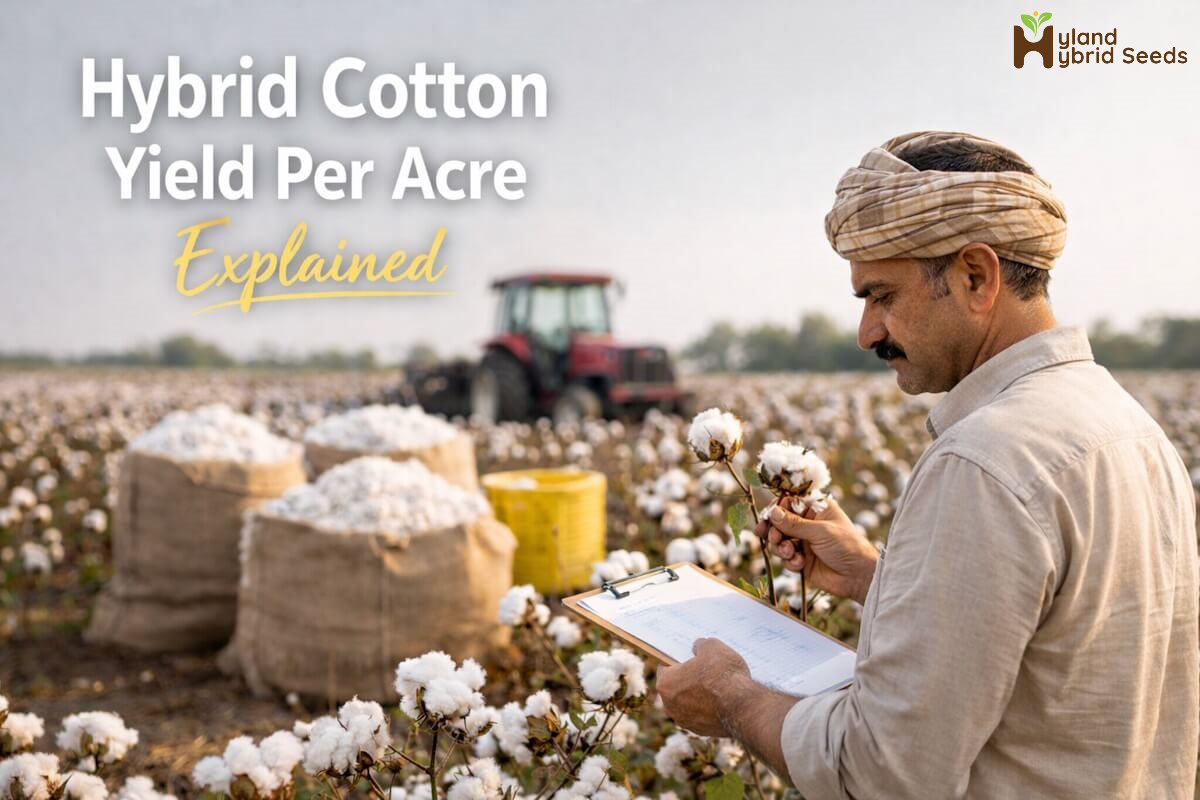
If you’re in cotton farming or planning to get into it, one question probably sits at the top of your list—how much yield does hybrid cotton give per acre? The short answer? It depends. The long answer? It depends on more than you might think. Seed variety, planting timing, soil quality, weather, irrigation methods, pest pressure—everything counts. Hybrid cotton is known for bumping up production, but you still need to know what you’re doing to get the most out of it. Let’s walk through it all. Real numbers, no fluff.
Not sure which cotton seed works best for your field?
Contact usWhat’s the Average Cotton Yield Per Acre?
In India, a typical acre of cotton using conventional varieties gives you around 320 to 400 kilograms of lint cotton. But when farmers switch to hybrid cotton seeds, yields can climb—often up to 500 to 600 kilograms per acre. Under ideal conditions, some growers even reach 700 kilograms or more. That’s roughly 3 bales of cotton per acre, give or take. A few high-performing farms have reported 4-bale yields, though that’s not common for everyone. So yes, hybrids can bring a clear bump in cotton yield per acre. But they don’t work on autopilot. You still need to get everything else right.
Why Farmers Choose Hybrid Cotton Seeds
Hybrid seeds aren’t new, but they’ve gotten better in the last few years. These seeds are developed by crossing two different parent lines to get traits like higher yield, stronger resistance to pests, and better adaptability to stress. Here’s what you get when you choose the right hybrid:
- Higher boll count per plant
- Better boll retention (fewer fall off)
- Some level of drought resistance
- Improved tolerance to sucking pests and bollworms
- Faster maturity in some cases, which helps with staggered harvesting
It’s not all upside, though. Hybrid seeds cost more. You need to plant fresh seed every year. And if you don’t manage nutrition or pests well, the results might not meet expectations. Still, most commercial growers see better profits when they switch—mainly due to the bump in cotton yield per acre.
What Really Impacts Your Cotton Yield?
Switching to hybrid cotton seeds is just one piece. Here’s what else you need to keep an eye on if you want better output.
1. Soil Health & Preparation
It starts underground. Cotton needs well-drained soil, good structure, and a pH between 5.8 and 8.0. Compact or saline soil? That’s going to cause problems. Get your soil tested. Balance nitrogen, phosphorus, potassium, and micronutrients based on your specific crop needs. Don’t wing it.
2. Seed Spacing & Plant Population
Some folks plant too dense thinking more plants = more cotton. Doesn’t work that way. Too many plants compete for light and nutrients, and you end up with smaller bolls. Depending on the hybrid and region, aim for 30,000 to 45,000 plants per acre with 3-4 plants per foot of row.
3. Irrigation Planning
Water is life. But cotton hates both too much and too little. If your field stays wet too long, roots suffocate. Not enough water during flowering or boll formation? That slashes yield. Drip irrigation or timed sprinkler systems can help you manage moisture better, especially during critical stages.
4. Pest & Disease Management
Let’s be real—pests don’t care what seeds you’re using. Bollworms, aphids, whiteflies, jassids… they show up like clockwork. You’ve got to stay ahead. Scout often, spray when needed, and rotate your pest control methods to avoid resistance. Also, don’t forget about fungal issues in humid conditions.
5. Timely Fertilization
Apply nutrients based on crop stage. Early vegetative growth needs more nitrogen. Mid-stage cotton prefers a balance. As the plant matures, potassium plays a key role in boll development and fiber strength. Micronutrients like zinc, boron, and magnesium also help with boll retention and leaf health.
6. Timing of Sowing
Plant too early and you risk poor germination. Plant too late and you run into cooler temps during boll opening. Find your local sowing window and stick to it. Also, don’t rush into wet fields. Wait for the right moisture level to avoid compaction or seed rot.
Need help boosting your cotton yield per acre?
Contact usReal-World Yield Scenarios
Let’s get specific. These are real-world average yield ranges you can expect from hybrid cotton, based on how well your field is managed:
| Field Condition | Expected Yield (Lint Cotton / Acre) |
|---|---|
| Poor management + low-quality seed | 270 – 360 kg |
| Average management + decent hybrid seed | 450 – 540 kg |
| Good practices + high-performing hybrid | 590 – 725 kg |
| Excellent conditions + precision farming | 770 – 910+ kg |
These are just lint yields. You’ll also get seed cotton (which includes lint and seed) at about 2x to 2.2x that amount in weight.
Finding a Reliable Cotton Seeds Supplier
Choosing a quality cotton seeds supplier can make or break your season. Here’s what to look for:
- Region-specific performance data
- Hybrid options that fit your irrigation and pest management style
- Support beyond the sale—field advice, pest updates, etc.
- Transparent germination and purity stats
A supplier who’s active in your region will know what’s actually working for farmers around you. Don’t just go after big brand names. Talk to local growers, compare real results, and ask for trial data if possible. Paying a little more per seed bag won’t matter if it gives you 100 to 150 kg more yield per acre.
Is It Always Worth Going Hybrid?
If you’re managing a large acreage, yes—it often pays off. Even with higher input costs, the jump in cotton yield per acre usually justifies it. But for small farms or low-input setups, it’s a tougher call. You’ve got to run the numbers. Also, hybrids are more sensitive to poor management. Skip fertilizer or delay irrigation? Yields drop fast. So only go hybrid if you’re ready to invest in the full cycle.
What Can You Do This Season?
If you’re aiming for better yield, here’s where to start:
- Switch to fresh, certified hybrid cotton seeds—no carryover bags
- Get a soil test before fertilizing anything
- Scout for pests weekly and spray only when needed
- Use growth regulators smartly to manage height and boll load
- Keep records—compare yield maps, pest reports, and weather data over seasons
Don’t overhaul everything at once. Make two or three smart changes each season. Monitor results. Adjust. That’s how you scale up without wasting money.
Final Thoughts
So yeah, hybrid cotton can give you more per acre. But only if you match it with good decisions across the board. The seed matters—but so does everything you do after planting. Want a better yield this year? Start with picking the right cotton seeds supplier. Match the variety to your field conditions. Then stay sharp with the basics—water, nutrients, spacing, and pest control. Your cotton’s potential is already in the bag. It’s how you manage the rest that decides how much of it you’ll actually harvest.
Looking for a reliable cotton seeds supplier?
Contact us