Best Carrot Seeds for Loose Soil vs Hard Soil: What Works Where?
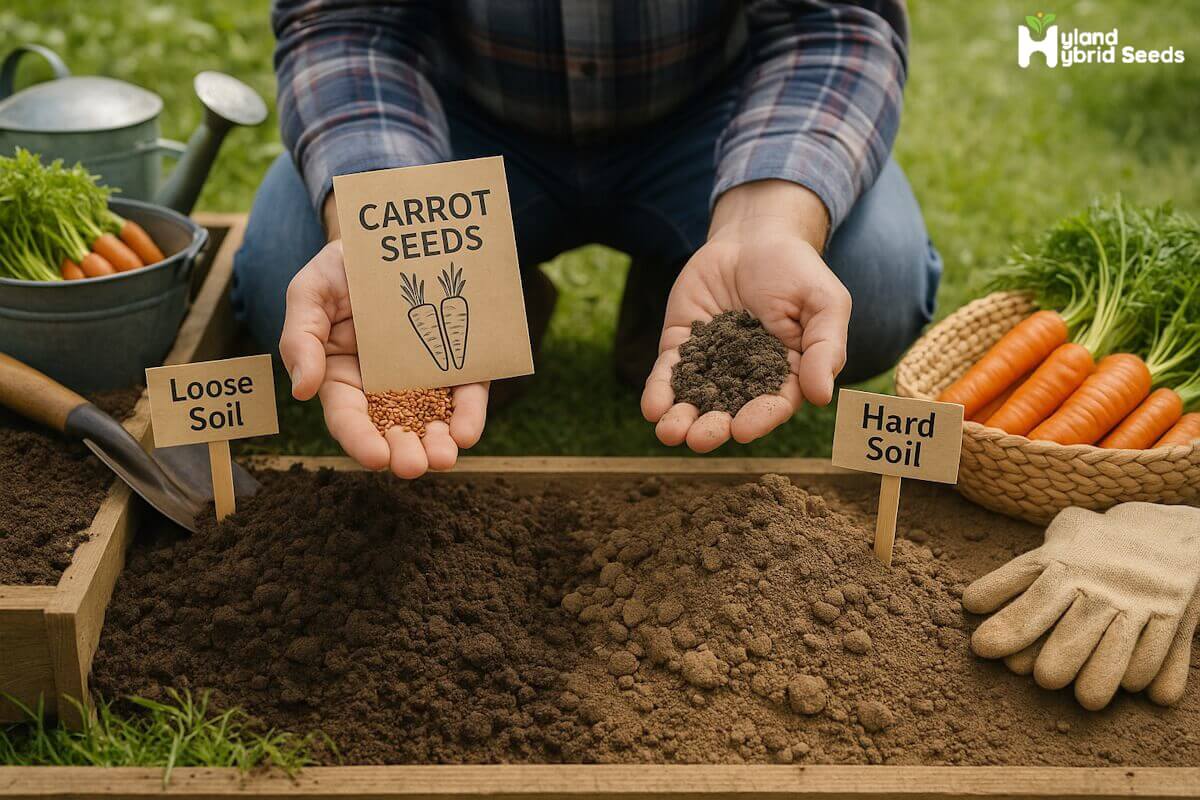
Carrots are picky little things. They won’t just grow anywhere you drop a seed. Soil plays a big role — probably bigger than most people think. If you’re tossing carrot seeds into the ground without considering the soil type, you’re setting yourself up for a lot of stunted, twisted, or outright failed carrots. So let’s talk about what works where — especially when it comes to best carrot seeds and how they behave in loose soil vs hard soil.
Why Soil Texture Even Matters
Before diving into which seed goes where, let’s get clear on what “loose” and “hard” soil even mean. Loose soil is crumbly, easy to dig into, and usually packed with organic matter. It drains well and doesn’t form clumps when wet. You’ll find this kind of soil in well-maintained garden beds, raised beds, or old farmland that’s been worked over for years.
Hard soil? That’s the stubborn stuff. Compacted, sometimes rocky, often low on organic matter. It doesn’t let water move freely and it’s a pain to dig. Think clay-heavy areas or places that haven’t been worked in ages. Carrots, with their long taproots, don’t do well in resistance. They need to move down into the soil smoothly.
So clearly, loose soil gives them a better shot. But that doesn’t mean you can’t grow carrots in tougher dirt — you just need to pick the right kind.
Not sure which carrot seeds fit your soil? Let our team help you choose the right variety for your garden or farm.
What Makes a Carrot Seed “Good” for a Particular Soil?
Not all carrot seeds are the same. Some are bred for uniformity. Others are hybrids made to handle tougher conditions. And some are traditional, open-pollinated types that do great in the right setting but won’t forgive you if you mess up the soil. A good carrot seed for your soil type will:
- Germinate quickly
- Develop a strong, straight taproot
- Resist disease common in your region
- Fit the maturity length you want
Let’s break it down between the two soil types.
Carrot Seeds That Thrive in Loose Soil
Loose soil is the dream setup. If you’ve got it, your choices open up quite a bit.
1. Nantes Varieties
These are some of the most forgiving and flavorful carrots you can grow. Nantes types do best in light, sandy soil. They’re short, blunt-ended, and grow fast — perfect for gardeners who want a quick, sweet harvest. Look for:
- Scarlet Nantes
- Nelson F1
- Bolero
These are among the best carrot seeds if you’re after a nice uniform look and classic carrot taste. Since they don’t need to fight through heavy dirt, they develop cleanly and taste great raw or cooked.
2. Imperator Hybrids
These grow long and slender, which means they really need that open soil path. If you’ve got deep, loose soil, Imperator types shine. You’ll often see these in grocery stores — that’s how popular they are.
- Sugarsnax 54
- Tendersweet
Both fall under the hybrid carrot seeds category and are ideal for commercial production too. The flavor is sweet, and the size is impressive if your soil lets them stretch out.
3. Chantenay (To a Point)
Some Chantenay types will also work in loose soil, but they’re usually better for medium soils. If you want a stockier carrot, this could be your pick. Just be sure your soil doesn’t dry out too fast — loose soils sometimes struggle to hold moisture.
Carrot Seeds That Work Better in Hard Soil
Let’s be real. Hard soil isn’t great for carrots, but not everyone can or wants to amend their soil deeply. If you’re dealing with clay-heavy or compacted ground, your best bet is to work with carrot types that are shorter and stubbier.
1. Chantenay Carrots
These are your go-to. They’re short, broad-shouldered, and tougher than most other types. They can handle denser soil and still form solid roots. Popular varieties include:
- Red Cored Chantenay
- Carson Hybrid
These don’t grow super long, so they’re less likely to get twisted or stunted in compact soil. That makes them a smart pick if you’re in a no-dig or minimally worked area.
2. Danvers
Another solid choice. Danvers carrots were actually developed for clay-heavy soils. They’re longer than Chantenay but still pretty sturdy. You can grow them in places where Imperators would totally fail. Try:
- Danvers 126
They’ve got decent disease resistance too, which helps if drainage is an issue.
3. Round Varieties (Parisian Types)
When in doubt, go short and round. If your soil is rock-solid and you don’t want to spend your weekend double-digging, Parisian types are great. They’re little, golf-ball-sized carrots that grow on top of the soil more than into it.
- Paris Market
- Romeo
They’re a good way to get a carrot harvest without doing a ton of soil prep.
Still comparing seed options for your soil? Get expert advice tailored to your location and needs.
Choosing Between Regular and Hybrid Seeds
You’ve probably seen both terms floating around: hybrid and non-hybrid. Here’s the quick breakdown.
- Hybrid carrot seeds are bred for specific traits like disease resistance, uniform size, faster growth, and better color. They’re reliable and perform well across different conditions.
- Non-hybrids (also called open-pollinated or heirloom) are less uniform but often praised for flavor and traditional growing. But they’re more sensitive to soil and conditions.
If you’re dealing with hard or unpredictable soil, going with hybrid carrot seeds might save you a lot of headaches. And if you’re buying in bulk or need consistent results, find a hybrid carrot seeds supplier who can offer varieties suited to your region and soil condition.
Loose vs Hard Soil: Quick Comparison Table
| Factor | Loose Soil | Hard Soil |
|---|---|---|
| Best Carrot Types | Nantes, Imperator, some Chantenay | Chantenay, Danvers, Round types |
| Root Shape | Long, slender | Short, blunt, round |
| Soil Prep Needed | Minimal | Moderate to high |
| Germination Speed | Fast | Slower, depending on compaction |
| Water Drainage | Excellent | Poor to moderate |
| Ideal Seed Type | Hybrid or heirloom | Hybrid preferred |
Soil Tips That Make a Difference
Even if you pick the right seeds, a few tweaks to your soil can make or break the harvest. For Loose Soil:
- Don’t overwater. It drains fast.
- Add compost to hold moisture.
- Avoid high-nitrogen fertilizers — they make carrots grow tops, not roots.
For Hard Soil:
- Consider raised beds.
- Add sand or compost to improve structure.
- Avoid stepping on the soil — it compacts easily.
You can also pre-soak carrot seeds in warm water for a few hours before sowing to speed up germination in tougher soil.
Where to Get Good Seeds
Don’t just grab any packet from the rack. It’s worth finding a hybrid carrot seeds supplier who knows their stuff. Whether you’re growing for home use or commercial harvest, a reliable supplier can help match you with the right type of seed for your soil. Ask about:
- Germination rates
- Disease resistance
- Root shape
- Maturity time
- Regional adaptability
It’s not just about buying seeds. It’s about buying the right seeds for your soil.
Final Thoughts: Match the Seed to the Soil
So, what’s the takeaway? If you’ve got loose soil, you’re in a good spot. Go for longer, sweeter varieties like Nantes or Imperator — even hybrids for better yields. Your soil gives you more flexibility. But if you’re stuck with hard or compacted dirt, go shorter. Chantenay, Danvers, and round types will give you the best shot. And if you don’t want surprises, pick from a trusted hybrid carrot seeds supplier who can steer you in the right direction. No two gardens are the same, and your soil is going to tell you what it wants. Just make sure you’re listening.
Ready to boost your carrot crop yield with the right hybrid seeds?