
Round, Long, or Cluster: Which Brinjal Variety Should You Plant This Season?
We help farmers pick the right brinjal seeds for their farm.
What Makes Each Brinjal Variety Different?
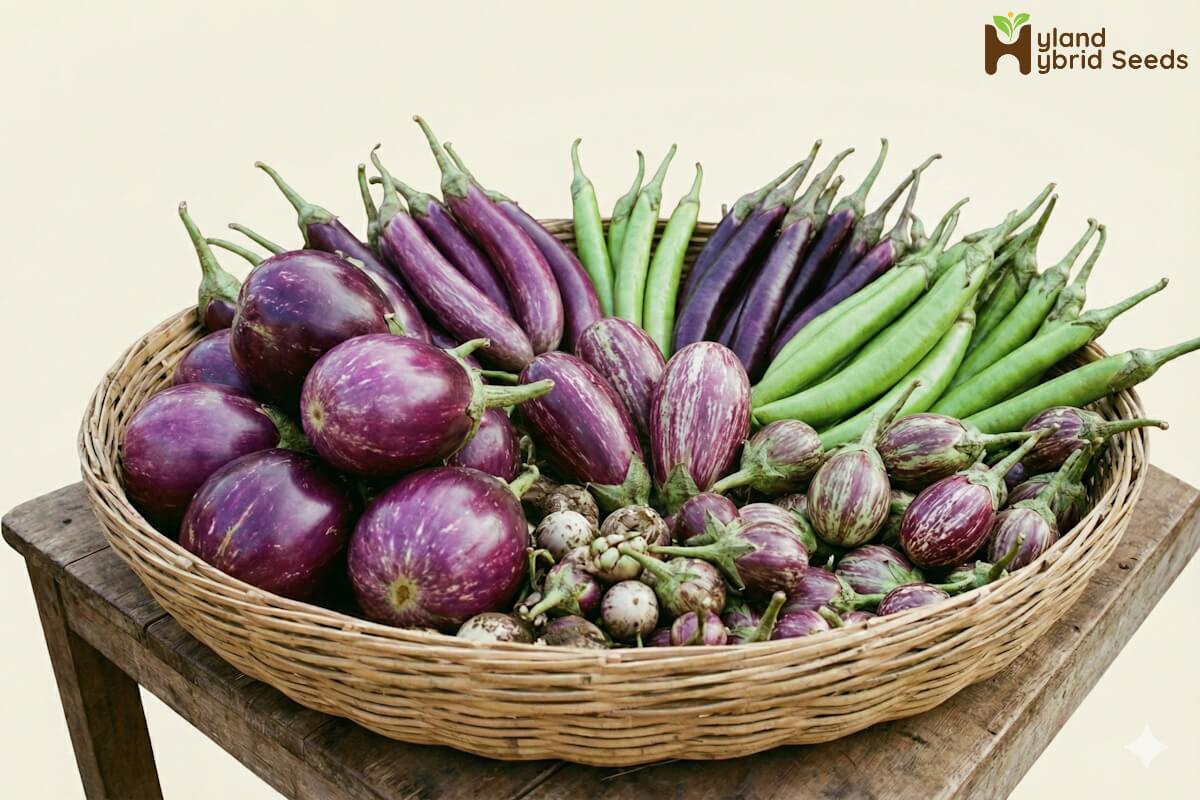
Before you pick one, you’ve got to understand what you’re choosing between.1. Round Brinjal Variety
This is probably the most recognizable one. Big, fat, globe-shaped fruits—these are often used in curries, roasted dishes, and traditional Indian recipes like baingan bharta. Why consider this variety?- High flesh content – You get more bulk, fewer seeds.
- Great for cooking – Holds up well in high heat.
- Strong local market – Many vendors prefer them due to customer familiarity.
- They’re heavier and need strong stalk support.
- These plants need a bit more care to avoid fungal infections since their fruits can touch the soil.
2. Long Brinjal Variety
These are the slender, elongated ones. You’ll often see them in stir-fries or stuffed recipes. They cook faster and absorb spices well. Pros:- Shorter maturity time – You might get to harvest a bit sooner.
- More fruits per plant – Smaller fruits, but more quantity.
- Easy to pack and sell – Less damage during transport.
- Less flesh compared to round ones.
- Needs more frequent harvesting to avoid over-ripening.
3. Cluster Brinjal Variety
Now, this one’s a little different. Instead of one or two fruits per stem, these grow in bunches. Great for small vendors or personal use where you want more fruits in one go. Good stuff:- Higher productivity – Several fruits at once.
- Uniform size – Looks neat, which helps in marketing.
- Compact plant structure – Suitable for smaller spaces.
- Fruits are usually smaller.
- Shelf life might be shorter depending on the type.
Choosing the Right Brinjal Variety for Your Region
Climate, water availability, soil, and even pest pressure matter. Here’s how to match your crop to your situation.In Hotter Regions
Long varieties usually do better in high heat. They grow quickly and mature before extreme heat or pests hit hard.In Humid or Rainy Areas
Go for a round brinjal variety that has a tough skin. Thin-skinned types don’t hold up as well under constant moisture.For Dry or Drought-Prone Areas
Cluster types are generally low maintenance and offer good output even when water is limited. Just make sure you mulch and manage the soil well.Brinjal Taste and Texture: What Do Buyers Want?
Sometimes, it’s not about what you like. It’s about what the market demands. Local shops, restaurants, and vegetable vendors all have preferences.- Round brinjal: Preferred by restaurants for roasting or stuffing.
- Long brinjal: Great for quick recipes and home cooks.
- Cluster type: Often popular in rural markets and with direct consumers.
Thinking About Seeds? Here’s What Matters
Don’t grab the first pack you see. Look for the best brinjal seeds based on what you actually want to grow. Hybrid or open-pollinated? Disease resistance? Days to maturity? These things matter. You also want to pick a brinjal seeds supplier who actually knows their stuff. Someone who can help you figure out the seed rate, suggest spacing, and maybe even offer insights based on your location.Still can’t decide between round, long, or cluster brinjals?
Common Mistakes While Choosing a Variety
Let’s talk about what people often get wrong.- Ignoring the market: Just because a variety looks good in photos doesn’t mean it sells well locally.
- Overestimating plant space: Long and cluster varieties need room. Don’t overcrowd.
- Wrong harvest timing: Letting fruits over-ripen affects taste and shelf life.
Round vs. Long vs. Cluster: Quick Comparison
| Feature | Round | Long | Cluster |
|---|---|---|---|
| Shape | Oval to spherical | Slender, elongated | Small and in bunches |
| Yield per plant | Medium to High | High | Very High |
| Market demand | Strong | Moderate to Strong | Niche |
| Cooking uses | Roasting, stuffing | Stir-fry, light curry | Quick fry, sabzi |
| Harvest cycle | 90–100 days | 70–85 days | 60–80 days |
| Seed requirement | Medium | Low to Medium | Low |
Got Space Constraints? Go with Cluster.
If you’re working with a small patch or even terrace gardening, cluster brinjal varieties make sense. You get more fruits with fewer plants. Plus, they look neat and clean, which is great for home harvesting. Long types can work too, especially in containers. Just remember to stake them early. Round types are best for open fields. They need space, good support, and steady water management.Watch for Pests and Diseases
Doesn’t matter which variety you choose, brinjal loves pests. Especially shoot borers, aphids, and fungal infections. Get your spraying schedule sorted early. Also, choose seed varieties that mention pest or disease tolerance. Ask your brinjal seeds supplier for suggestions. Don’t go in blind.Still Can’t Decide? Try All Three
There’s no one-size-fits-all answer. But here’s a quick way to figure it out:- Want bigger fruits with solid market value? Go for a round brinjal variety.
- Need quick harvests and more fruits per plant? Try the long type.
- Working with less space or trying something productive at home? Cluster variety has your back.
Need help placing an order or choosing quantity of brinjal seeds?
FAQs
Which brinjal type gives the highest yield?
Cluster types usually give the highest yield, as they produce several fruits in bunches. They’re a solid choice if you want more fruits from fewer plants.
How do I choose the best brinjal seeds for my farm?
Check the variety’s maturity period, climate suitability, and pest tolerance. Buying from a trusted brinjal seeds supplier also helps you pick seeds that match your soil and region.
Is there a taste difference between round and long brinjals?
Yes. Round brinjals are meatier and great for stuffing or roasting, while long brinjals cook faster and absorb seasoning more quickly. Each one fits a different cooking style.
Can I grow different brinjal varieties together?
You can grow multiple types in the same field as long as spacing is managed well. It’s a handy way to compare how each brinjal variety performs in your soil.
How often should brinjals be harvested for best quality?
Most varieties should be harvested every few days once fruiting starts. Picking them on time keeps the texture firm and the taste mild.