Precision Vegetable Farming: How to Maximize Yield Using Drip Irrigation and High-Performance Hybrids
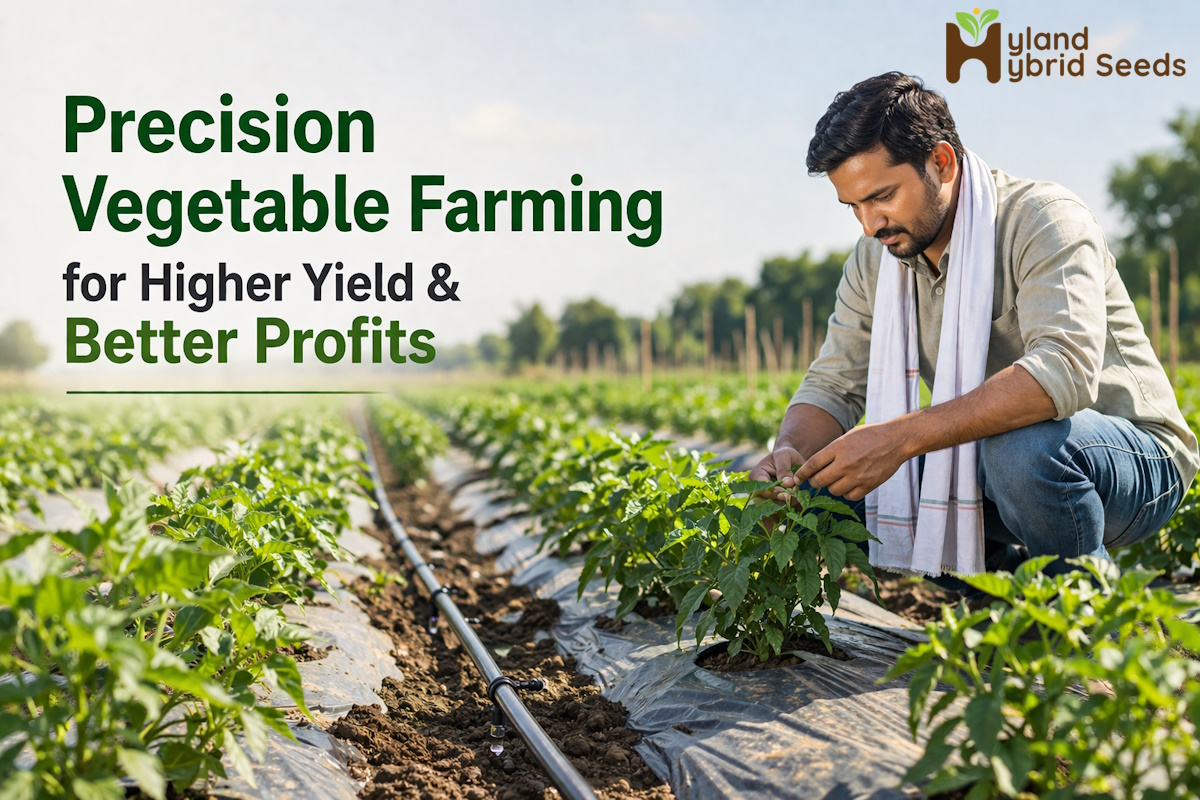
Precision Vegetable Farming: A Path to Higher Yields
Are you a vegetable farmer in India looking to increase your yields and profitability? The key lies in adopting precision vegetable farming techniques, which focus on optimizing every aspect of your crop management. This approach uses technology and careful planning to ensure your plants get exactly what they need, leading to healthier crops and higher returns. However, the first step is often the hardest – selecting the right seeds.
This article explores how you can maximize your vegetable yields using drip irrigation and high-performance hybrid vegetable seeds. By combining these two critical strategies, you can take control of your farm’s productivity, grow profitable vegetables, and improve overall profitability. The right seeds and efficient irrigation can transform your vegetable farming.
Want the best hybrid seeds for your region and crop?
The Power of Hybrid Vegetable Seeds
Choosing the right seeds is the foundation of successful vegetable farming. Hybrid vegetable seeds are developed through a controlled pollination process, combining the best traits of different parent plants. This results in seeds that offer superior characteristics compared to traditional varieties. But where do you start?
Benefits of Hybrid Seeds
Why should you choose hybrid vegetable seeds? Several advantages make them a smart choice for serious farmers.
1. Enhanced Yields
Hybrid varieties are bred for higher yield potential. This means more produce from the same area of land, boosting your profitability per acre. These seeds are designed to produce more, offering a clear advantage for commercial growers.
2. Disease Resistance
Many hybrid seeds are developed with built-in resistance to common diseases. This reduces the need for pesticides and fungicides, saving you money and protecting your crops from potentially devastating outbreaks. Reduced need for pesticides also results in healthier produce and consumer confidence.
3. Uniformity and Quality
Hybrid seeds often produce plants that grow uniformly, with consistent size and maturity. This makes harvesting easier and leads to higher quality produce that commands better prices in the market. Consistent quality is a key advantage for selling to wholesalers and retailers.
4. Adaptability
Hybrid seeds are often selected for their ability to thrive in specific climates and soil conditions. This means you can choose varieties that are best suited to your local environment, leading to stronger, more productive plants. Adapting to conditions is often the difference between a good harvest and crop failure.
Popular Hybrid Vegetable Seed Choices
Different vegetables thrive with different hybrid seed varieties. Here are a few popular choices to consider:
1. Hybrid Tomato Seeds
Hybrid tomato seeds offer a range of benefits, including improved disease resistance and higher yields. Consider varieties like those bred for specific disease resistance. This can dramatically reduce the need for chemical treatments and improve crop health.
2. Hybrid Onion Seeds
Hybrid onion seeds are known for their strong performance, especially regarding storage and bulb size. Choosing the right onion variety can dramatically change your harvesting and market opportunities. Consider the specific climate and day length requirements of different hybrid varieties.
3. Hybrid Cauliflower Seeds
Hybrid cauliflower seeds deliver improved head size and uniformity. This makes harvesting easier and gives your crop a better market value. Select varieties that are suited to your region’s temperature and rainfall patterns.
Drip Irrigation: The Foundation of Precision Vegetable Farming
While hybrid vegetable seeds set the stage, effective irrigation is essential for maximizing their potential. Drip irrigation delivers water directly to the roots of your plants, providing several advantages over traditional methods.
Advantages of Drip Irrigation
Drip irrigation offers significant benefits for vegetable farmers.
1. Water Efficiency
Drip irrigation minimizes water waste by delivering water directly to the root zone. This is particularly important in regions with water scarcity. This method uses up to 60% less water than flood irrigation.
2. Reduced Disease Risk
By keeping foliage dry, drip irrigation reduces the risk of fungal diseases that thrive in moist conditions. This can dramatically decrease the need for fungicide applications. This targeted approach is a key part of precision vegetable farming.
3. Nutrient Delivery
Drip systems can be used to deliver fertilizers directly to the root zone, a process known as fertigation. This ensures that plants receive the nutrients they need when they need them. This can dramatically improve nutrient use efficiency.
4. Higher Yields
The combined effect of efficient watering, reduced disease, and targeted nutrient delivery results in higher yields and healthier plants. This translates to more profits. This focused approach is an essential part of precision vegetable farming.
Need the right hybrid seeds and drip setup for your farm?
Integrating Hybrid Seeds and Drip Irrigation
The true power of precision vegetable farming lies in integrating hybrid seeds with drip irrigation. This combination creates a synergy that enhances crop performance.
Seed Selection and Irrigation Planning
Here’s how to bring these elements together:
1. Match Varieties to Climate and Season
Choose hybrid vegetable seeds that are well-suited to your local climate and planting season. Consider factors like heat tolerance, disease resistance, and maturity time. Proper planning will set you up for success from the beginning.
2. Design Your Drip System
Plan your drip irrigation system to match the needs of your chosen vegetable varieties. Consider the spacing between plants, water requirements, and the specific layout of your fields. The right system layout helps ensure even water distribution.
3. Optimize Irrigation Schedules
Monitor your crops regularly and adjust your irrigation schedule based on the growth stage of the plants and weather conditions. Using soil moisture sensors can provide valuable data. This precise approach is a cornerstone of precision vegetable farming.
Benefits of Integrated Farming
Combining these two techniques can deliver powerful results.
1. Increased Yields and Quality
The combined benefits of high-performance seeds and efficient irrigation lead to higher yields and superior produce quality. This means more profit per acre.
2. Reduced Input Costs
By reducing water consumption and the need for pesticides, you can lower your overall input costs. This can improve your profit margins significantly. Reduced spending means greater profitability.
3. Sustainable Practices
Efficient water use and reduced chemical applications promote more sustainable farming practices, protecting the environment. Doing your part to conserve water and use less chemicals is important.
Common Mistakes to Avoid in Precision Vegetable Farming
Even with the best seeds and irrigation systems, some common mistakes can undermine your efforts.
1. Poor Seed Selection
Choosing the wrong seed varieties can lead to poor yields and increased disease problems. Always select seeds that are suited to your local climate and growing conditions. Choosing the wrong variety is one of the most common farming mistakes.
2. Improper Irrigation Practices
Overwatering or underwatering can damage your crops. Monitor your plants regularly and adjust your irrigation schedule as needed. Using a water meter will help you stay informed on the use.
3. Neglecting Soil Health
Healthy soil is essential for healthy plants. Ensure you have the right soil before you start. Use soil testing to understand your soil’s composition. This will help you identify any deficiencies.
Ready to maximize your chilli farming profits this season?