
The Future of Fiber: Why Hybrid Cotton Seeds are the Answer to Changing Climates
The Looming Threat to Cotton Farming in India
For generations, cotton has been a cornerstone of Indian agriculture, providing livelihoods for millions and contributing significantly to the nation’s economy. However, as the climate shifts, traditional cotton farming practices face increasing challenges. Erratic rainfall, rising temperatures, and the emergence of new pests and diseases are threatening yields and farmer incomes. The need for adaptation is no longer a choice but a necessity. The future of cotton farming depends on adopting innovative solutions, with hybrid cotton seeds for climate change leading the way.
This article delves into how climate change impacts cotton farming and why selecting the right hybrid cotton seeds is a critical decision. We’ll explore the benefits of these advanced seeds, providing practical insights for farmers to safeguard their crops and ensure long-term profitability. Understanding the nuances of climate-resilient cotton seeds is key to navigating the uncertainties ahead.
Understanding the Impact of Climate Change on Cotton
Climate change isn’t a distant threat; it’s a present reality for Indian cotton farmers. The unpredictable nature of weather patterns has direct consequences on the crop. Droughts can devastate entire fields, while excessive rainfall leads to waterlogging and disease outbreaks. Rising temperatures accelerate pest infestations, making it harder to control crop damage. These shifts demand a proactive approach to cotton cultivation.
Erratic Rainfall Patterns
Unpredictable rainfall is one of the biggest challenges. Regions that once enjoyed reliable monsoon seasons now experience prolonged dry spells followed by intense, damaging floods. This variability directly affects planting schedules, irrigation needs, and the overall health of the cotton plants. Farmers must adapt by choosing varieties that can withstand these extremes and adjusting their farming practices accordingly.
Rising Temperatures and Heat Stress
Higher temperatures create heat stress, which hinders cotton plant development. This leads to reduced flowering, boll formation, and fiber quality. Heat stress also weakens the plants, making them more susceptible to pests and diseases. Farmers need heat-tolerant varieties to mitigate these effects. Choosing the right hybrid cotton seeds benefits crop resilience in high temperatures.
Increased Pest and Disease Pressure
Changing climate conditions favor the proliferation of pests and diseases. Warmer temperatures and altered humidity levels create ideal conditions for pests like whiteflies and bollworms, as well as fungal and bacterial diseases. Traditional cotton varieties often lack the necessary resistance to these threats, leading to significant yield losses. Utilizing climate-resilient cotton seeds is a key strategy for mitigating this risk.
Are you seeing increased pest pressure in your cotton fields?
The Power of Hybrid Cotton Seeds
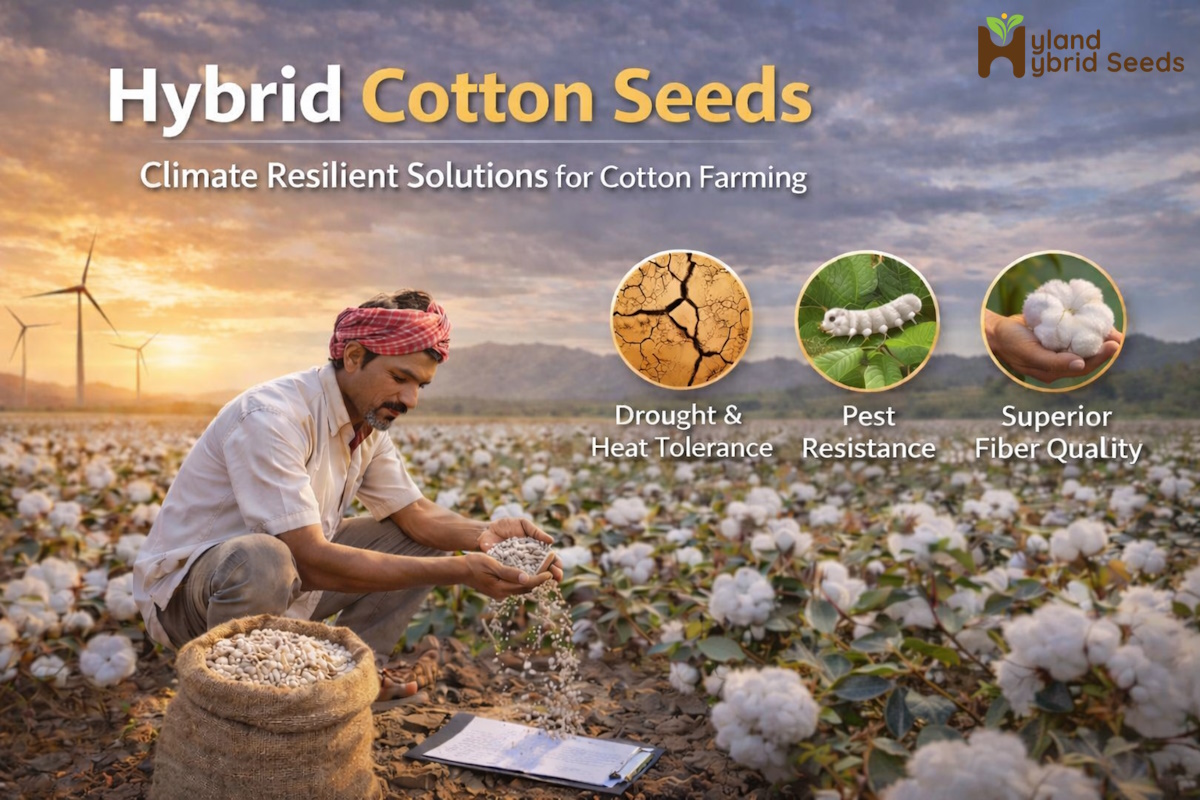
Hybrid cotton seeds represent a significant advancement in crop science. These seeds are produced by cross-pollinating two different parent plants, resulting in offspring with superior traits. The benefits are numerous, particularly when it comes to adapting to climate change. The best hybrid cotton seeds offer traits like drought tolerance, pest resistance, and improved fiber quality.
Enhanced Yield Potential
One of the primary advantages of hybrid cotton seeds is their higher yield potential. Through careful selection and breeding, these seeds can produce more bolls per plant and larger bolls with heavier fibers. This translates into increased profitability for farmers, even in challenging climatic conditions. Investing in high-yielding hybrid cotton seeds is a direct response to climate change impacts.
Improved Disease and Pest Resistance
Hybrid varieties are often bred for resistance to common cotton diseases and pests. This reduces the need for extensive pesticide use, lowering input costs and promoting more sustainable farming practices. Disease resistance is a critical attribute, as climate change intensifies pest and disease pressures. Choosing hybrid seeds can significantly reduce crop losses.
Superior Fiber Quality
Fiber quality is a crucial factor in determining the market value of cotton. Hybrid seeds are often engineered to produce longer, stronger, and finer fibers. This results in higher market prices and increased income for farmers. With climate change impacting fiber development, selecting for quality becomes even more important. Understanding the hybrid cotton seeds benefits is critical for success.
Ready to enhance your cotton yield and fiber quality?
Selecting the Right Hybrid Cotton Seeds
Choosing the right hybrid cotton seeds is a critical decision that requires careful consideration of several factors. Farmers must evaluate their local climate conditions, soil type, and the specific challenges they face. Researching different varieties and understanding their traits is essential for making an informed choice. The right choice in hybrid cotton seeds for climate change will help you get the best outcomes.
Assess Your Local Climate and Soil Conditions
Consider the typical rainfall patterns, temperature variations, and soil characteristics in your region. Certain hybrid varieties are better suited to drought-prone areas, while others thrive in humid climates. Soil type also plays a role, as some hybrids perform better in specific soil textures and nutrient levels. Understanding these factors will guide your seed selection.
Evaluate Disease and Pest Resistance
Identify the most prevalent diseases and pests in your area and choose hybrids with proven resistance to them. This will minimize the need for chemical interventions and reduce the risk of crop damage. Look for varieties with resistance to common pests like bollworms and aphids, and diseases like fusarium wilt. This is the goal of climate-resilient cotton seeds.
Consider Yield Potential and Fiber Quality
Evaluate the yield potential of different hybrid varieties and their fiber quality characteristics. Review data on average yields in your region and compare the fiber properties. Higher yields and better fiber quality translate directly into higher profits. Select hybrids that offer a balance of high yield, good fiber quality, and resistance to local threats. Understand the hybrid cotton seeds benefits for yield and quality.
Best Practices for Planting and Managing Hybrid Cotton
Selecting the right hybrid cotton seeds is only the first step. Proper planting and management practices are essential for maximizing yield and ensuring crop health. This includes preparing the soil, optimizing planting density, and implementing effective irrigation and pest management strategies. Following these best practices will help you realize the full potential of your chosen hybrid.
Soil Preparation and Planting Techniques
Prepare the soil thoroughly before planting by tilling, adding organic matter, and ensuring proper drainage. Choose the appropriate planting time for your region and follow the recommended planting depth and spacing for your chosen hybrid. Proper soil preparation and planting techniques set the foundation for healthy plant growth.
Irrigation and Nutrient Management
Irrigate your cotton fields according to the specific needs of the hybrid variety and the local climate conditions. Implement a nutrient management plan that provides the necessary nutrients for optimal plant growth and fiber development. Regular monitoring of soil moisture and nutrient levels is crucial for successful crop management.
Pest and Disease Control
Implement an integrated pest management (IPM) strategy to control pests and diseases. This includes regular scouting of fields, the use of beneficial insects, and the judicious application of pesticides when necessary. Early detection and prompt action are key to preventing significant crop losses. Utilizing hybrid cotton seeds for climate change will help with pest management.
Common Mistakes to Avoid
Even with the best hybrid seeds, farmers can make mistakes that hinder crop performance. Avoiding these common pitfalls can significantly improve yields and profitability. Pay close attention to these common mistakes and make informed decisions.
Ignoring Local Climate Conditions
Failing to consider your local climate conditions when selecting a hybrid variety is a major mistake. Choose seeds that are specifically suited to your region’s rainfall patterns, temperature variations, and soil conditions. Planting the wrong variety can lead to poor yields and increased crop failure risk. Ensure the seeds are climate-resilient cotton seeds.
Poor Soil Management
Neglecting soil preparation and nutrient management can severely impact cotton yields. Ensure proper soil preparation, including tilling, drainage, and the addition of organic matter. Implement a balanced nutrient management plan to provide the necessary nutrients for healthy plant growth. Healthy soil equals higher yields.
Inadequate Pest and Disease Control
Failing to implement effective pest and disease control measures can result in significant crop losses. Regularly scout your fields, identify potential threats early, and take prompt action to control infestations. Relying solely on pesticides without an integrated approach can lead to resistance and environmental damage. The need for hybrid cotton seeds benefits is essential in this case.
Need help selecting the best hybrid seeds for your farm?